Physical Security Controls Assessment
Review how well your organization protects facilities, work areas, network closets, sensitive media, and visitor access as part of an internal security audit.
Open Tool
Cybersecurity Audit
Use this internal audit tools to identify gaps across current control gaps, evidence confidence, and business impact. Treat the result as initial guidance and validate material findings through a professional review.
CISO-led guidance from Ali Hassani, backed by 25+ years of IT, cybersecurity, compliance, and infrastructure experience.
The Internal Audit Tools category is designed as a practical starting point for internal cybersecurity control review. Each page focuses on a specific control area and generates a lightweight readiness report with colorful scoring, category breakdowns, and priority recommendations.
These tools are introductory self-assessments only and are not a replacement for a full internal security audit, compliance audit, penetration test, vulnerability assessment, technical validation, or professional consulting engagement.
These assessments are aligned to the same practical, business-friendly style used across the OC Security Audit self-assessment library.
They are intended to help you structure a more focused conversation around control ownership, technical evidence, risk reduction, remediation planning, and executive reporting.
Review how well your organization protects facilities, work areas, network closets, sensitive media, and visitor access as part of an internal security audit.
Open ToolAssess physical, environmental, and operational safeguards around server rooms, network racks, and controlled IT infrastructure spaces.
Open ToolEvaluate internal segmentation, east-west visibility, access control, documentation, and internal traffic protection for business networks.
Open ToolAssess the hardening, configuration control, access security, logging, and segmentation discipline of internal network devices and firewall infrastructure.
Open ToolReview enterprise wireless security, guest segmentation, admin access, rogue access point detection, and monitoring for internal wireless networks.
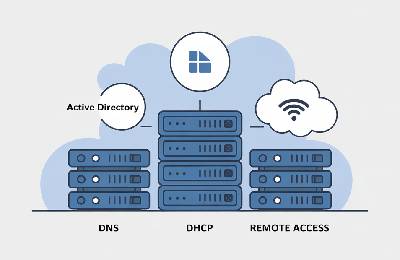
Open ToolReview core DNS and DHCP security, redundancy, access control, logging, and documentation that support internal network reliability and control.
Open ToolAssess the security, monitoring, administration, and resilience of core internal network services such as NTP, RADIUS, LDAP, VPN, file sharing, and certificate services.
Open ToolEvaluate whether critical infrastructure has meaningful redundancy, documented failover procedures, and tested recovery paths for internal operations.
Open ToolAssess VPN security, MFA, zero-trust-style restrictions, vendor access, session logging, and device-compliance checks for remote connectivity.
Open ToolReview hardening, patching, privileged access, logging, and remote administration controls for Windows and Linux servers.
Open ToolAssess database access control, encryption, patching, logging, backup protection, and sensitive-data safeguards across internal business systems.
Open ToolReview patching, authentication, file permissions, TLS, logging, and internal application exposure risks for internal-facing web servers.
Open ToolReview endpoint patching, encryption, EDR, browser security, removable media controls, and inventory discipline for desktops and laptops.
Open ToolAssess mobile device management, encryption, BYOD controls, app risk, update discipline, and secure access requirements for smartphones and handheld devices.
Open ToolAssess shared-folder permissions, ransomware resilience, file auditing, sensitive-data exposure, and access review discipline across internal file servers.
Open ToolAssess patch coverage, ownership, testing, reporting, exceptions, and vulnerability-based prioritization across servers, endpoints, browsers, and network devices.
Open ToolReview EDR deployment coverage, isolation capability, behavioral monitoring, alert handling, retention, and response workflows for endpoints and servers.
Open ToolAssess privileged groups, stale objects, domain controller hardening, service accounts, auditing, and recovery readiness for Microsoft Active Directory environments.
Open ToolReview whether security baselines, password policies, firewall settings, restrictions, and GPO change control are consistently enforced through Group Policy.
Open ToolReview privileged account segregation, MFA, shared-admin risk, monitoring, vaulting, and access-review discipline for administrative identities.
Open ToolEvaluate how well your organization collects, reviews, correlates, and escalates logs from endpoints, servers, network devices, and cloud services.
Open ToolAssess backup coverage, restore testing, resilience, access control, and documented recovery planning for internal systems and critical business services.
Open ToolAssess how prepared your organization is to identify, escalate, contain, investigate, and document internal cybersecurity incidents.
Open ToolReview policies, reviews, ownership, vendor oversight, onboarding controls, and management reporting that support internal security governance.
Open ToolAssess employee cybersecurity awareness, phishing readiness, policy acknowledgement, and recurring education across office and remote work environments.
Open ToolAssess whether security-relevant technology changes are documented, approved, tested, validated, and reviewed across infrastructure and production systems.
Open ToolAssess whether hardware, software, servers, network devices, endpoints, and cloud assets are inventoried, owned, classified, and tracked through lifecycle changes.
Open ToolReview internal scanning coverage, remediation ownership, exception handling, reporting, and prioritization across servers, endpoints, and network devices.
Open ToolReview whether key policies, diagrams, logs, reports, test results, and evidence records are organized well enough to support an internal security audit.
Open ToolUse a scorecard-style assessment to review major internal audit categories and quickly identify top internal cybersecurity control gaps and remediation priorities.
Open ToolOC Security Audit can help you move beyond self-scoring into a practical internal cybersecurity assessment, remediation roadmap, evidence review, and executive-ready internal audit process.
These tools are for initial guidance only and do not replace a professional cybersecurity audit, compliance assessment, penetration test, vulnerability assessment, or final professional opinion.
This website uses essential cookies for security and operation. Optional analytics and advertising cookies help measure site use and outreach. Choose Allow or Deny. You can change your choice at any time.