Payment Scope Review
Discuss how cardholder data may move through your business and where PCI DSS responsibility may apply.
- Retail POS and payment terminals
- E-commerce and hosted checkout flows
- Payment vendors, processors, and service providers

Get a practical conversation about payment security scope, cardholder data risk, evidence gaps, and the next steps needed before a PCI DSS audit or compliance review.
PCI DSS can feel simple until the conversation reaches real scope: payment terminals, e-commerce checkout, remote access, firewalls, wireless networks, service providers, vulnerability scans, policies, logs, and evidence.
OC Security Audit helps Orange County and Southern California businesses understand where they stand before investing in a full PCI DSS readiness assessment, audit preparation project, or remediation effort. The consultation is designed for practical direction, not generic checklists.

The free consultation is a short, business-friendly review of your payment environment and likely readiness priorities. It helps you decide whether you need a full readiness review, a technical assessment, remediation planning, or a narrower scope discussion.
Discuss how cardholder data may move through your business and where PCI DSS responsibility may apply.
Review the major technology areas that commonly affect PCI DSS readiness.
Understand the documents, screenshots, reports, and technical proof that may be needed.
PCI DSS readiness is not only a retail issue. Many local businesses inherit cardholder data risk through payment systems, online forms, remote support tools, network design, vendor access, or weak documentation.
Stores, restaurants, clinics, local service companies, and offices using payment terminals or merchant services can use the consultation to identify practical next steps.
Businesses using online checkout, website forms, shopping carts, payment plugins, or third-party payment pages can review how scope may apply.
IT managers, controllers, office managers, business owners, and compliance teams can use the session to prepare for processor requests, cyber insurance reviews, or customer security questions.
A strong PCI DSS readiness process reviews more than forms. It connects technical controls to business risk: segmentation, access control, vulnerability management, secure configuration, logging, vendor oversight, incident response, backup, and policy evidence.
OC Security Audit helps translate those items into clear remediation priorities for owners, IT managers, executives, and compliance stakeholders.

Start from the contact page and describe your payment environment, business type, and timeline.
Review payment flow, technology stack, vendors, documentation, current concerns, and compliance pressure.
Talk through likely PCI DSS readiness gaps and whether they are technical, procedural, or evidence-related.
Decide whether the next step is a readiness review, technical assessment, remediation project, or executive roadmap.
Best when you need an initial conversation, basic scope direction, and a professional opinion on whether a deeper review is needed.
Best when you need a structured review of controls, evidence, technical settings, and remediation priorities before a formal audit or compliance request.
PCI DSS readiness often touches multiple parts of a business environment. These related OC Security Audit services can help when the consultation identifies a deeper need.
Review firewall rules, remote access, VLANs, guest networks, and segmentation controls that affect cardholder data scope.
Identify scanning, remediation, and patch management gaps that can create PCI DSS findings.
Use PCI DSS readiness findings to improve your broader security posture for insurance and customer security reviews.
OC Security Audit focuses on PCI DSS readiness, security review, evidence, and risk guidance. When the findings require practical IT work such as network changes, endpoint management, patching, backups, Microsoft 365 support, or ongoing managed IT operations, IT Perfection, also managed by Ali, can help with implementation.
This keeps the roles clear: OC Security Audit helps identify and prioritize the security and compliance needs, while IT Perfection can support related IT projects and operations when that is the right next step for the business.
The consultation can help you talk through payment flows and identify whether cardholder data touches your systems, website, network, staff, vendors, or support process.
Evidence may include policies, access reviews, vulnerability scans, firewall rules, diagrams, inventories, training records, logging proof, and remediation records. The right evidence depends on scope.
Sometimes, but it does not automatically remove all responsibility. You may still need vendor oversight, secure website practices, staff process controls, and evidence that your environment does not expose payment data.
No. It is an initial professional discussion to help you understand scope, likely gaps, and next steps. A full PCI DSS readiness assessment or formal audit requires deeper evidence and technical review.
Use the contact page to request a PCI DSS readiness consultation with OC Security Audit. Include your business type, payment method, location, and any request from your payment processor, bank, customer, or auditor.
This consultation page is a good starting point for owners and IT managers. The supporting PCI DSS guides help visitors understand what to collect, what to review, and how to prepare before the conversation.
Move through the PCI DSS review in a practical order: understand the payment environment, define scope, map controls to evidence, validate testing requirements, and turn findings into remediation work for the business, IT team, MSP, and payment vendors.
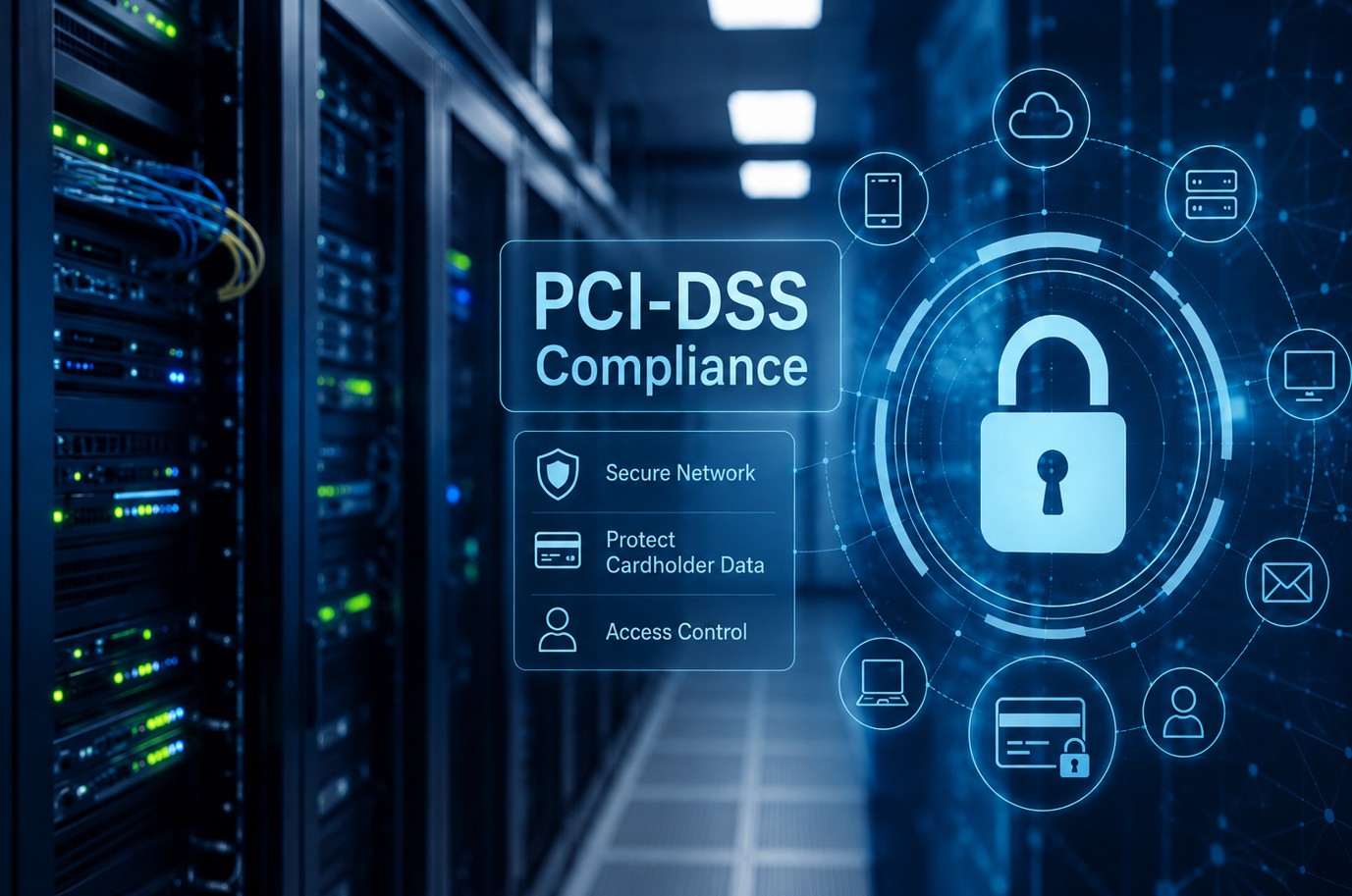
If the team is still defining the payment environment, review What Is PCI DSS? and Who Needs PCI DSS Compliance?. These pages explain cardholder data, service-provider impact, merchants, ecommerce, POS, and vendor responsibility.
Use PCI DSS Requirements Explained and PCI DSS Scope and Segmentation to connect the 12 control areas to firewalls, secure configuration, account data protection, access control, logging, testing, and policy evidence.
When the business is preparing an SAQ, AOC, ROC, QSA conversation, or ASV scan, continue with PCI DSS Validation Guide and PCI DSS Evidence Checklist.
For technical gaps, review Vulnerability Scanning and Penetration Testing, Cloud, Ecommerce, POS, and Payment Applications, and the PCI DSS Compliance Roadmap. For guided help, contact OC Security Audit.
This website uses essential cookies for security and operation. Optional analytics and advertising cookies help measure site use and outreach. Choose Allow or Deny. You can change your choice at any time.