Hotline: 949-777-5567
Email: support@OCsecurityAudit.com
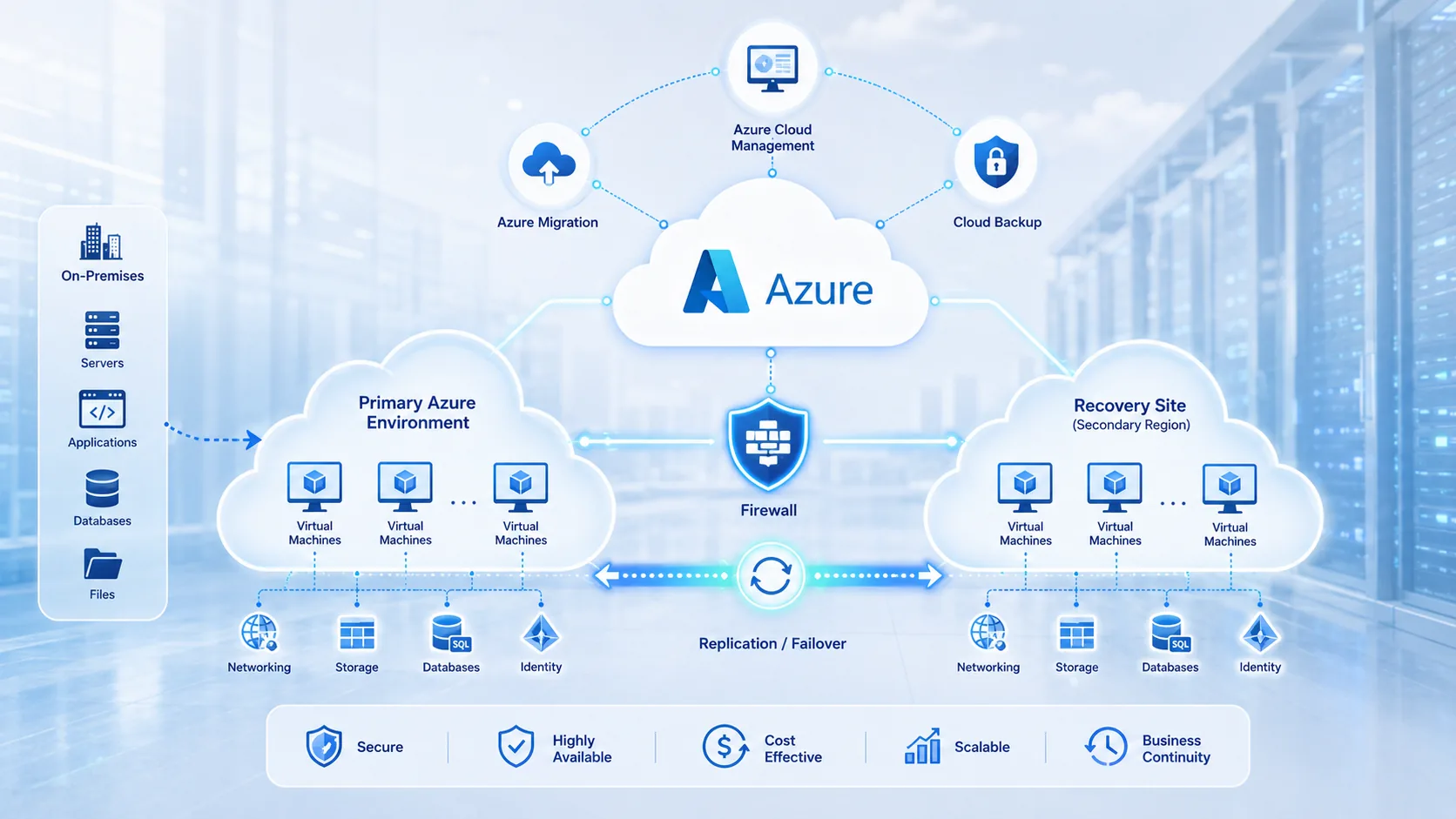
Microsoft Azure delivers industry-leading cloud infrastructure and services — but without a strong security foundation, your organization is exposed to data breaches, ransomware, identity compromise, and costly regulatory violations (HIPAA, PCI-DSS, NIST, CCPA).
✅ Identity-First Security (Zero Trust)
✅ Secure Network Architecture
✅ Advanced Threat Detection & Response
✅ Data Protection & Encryption
✅ Incident Response & Threat Mitigation
✅ Vulnerability Assessment & Risk Analysis
At OC Security Audit, we combine over 25 years of security experience with best-practice cloud hardening frameworks to secure Azure workloads, protect data, and strengthen compliance posture.
OC Security Audit provides Microsoft Azure security services throughout Orange County.
We serve businesses in Irvine, Anaheim, Santa Ana, Costa Mesa, Newport Beach, Huntingtonton Beach, Fullerton, Orange, Garden Grove, Mission Viejo, and other cities throughout Orange County, California.
✅ Secure Azure cloud infrastructure and workloads
✅ Protect identities, data, and virtual networks
✅ Improve cloud security posture and compliance
We deliver professional vulnerability scanning across Orange County, California.
Our services cover Irvine, Anaheim, Santa Ana, Costa Mesa, Newport Beach, Huntington Beach, Fullerton, Orange, Garden Grove, Mission Viejo, and other cities throughout Orange County.
✅ Detect weaknesses before attackers do
✅ Actionable remediation included
✅ Trusted by Orange County businesses
MFA Enforcement
We verify that multi-factor authentication is enforced for all users, especially administrators, to prevent credential-based attacks.
Conditional Access Policies
We review access rules based on location, device, and risk level to block unauthorized or risky sign-ins.
Legacy Authentication Blocking
We ensure outdated and insecure authentication methods are disabled to reduce brute-force and password spray risks.
Identity Protection Policies
We assess risk-based policies that automatically respond to compromised or high-risk accounts.
Guest & External User Controls
We validate access restrictions and lifecycle management for external and B2B users.
Just-In-Time Role Activation
We confirm that admin privileges are time-limited and only activated when necessary.
Admin Role Assignment Review
We identify excessive or permanent admin roles that increase attack impact.
Approval Workflows
We verify approval requirements for privilege elevation to prevent unauthorized access.
Privileged Logging & Alerts
We ensure all privileged actions are logged and monitored for suspicious behavior.
Break-Glass Accounts
We check emergency accounts are secured, monitored, and excluded from daily use.
Least-Privilege Enforcement
We verify users and services have only the permissions required to perform their job.
Custom Role Usage
We review custom roles to ensure they do not unintentionally grant excessive access.
Scope Limitation
We validate roles are assigned at the minimum scope (resource, resource group).
Orphaned Role Cleanup
We identify unused or stale role assignments that pose unnecessary risk.
Service Account Permissions
We assess application and automation identities for excessive privileges.
Location-Based Controls
We restrict access from high-risk or unauthorized geographic locations.
Device Compliance Enforcement
We ensure only compliant, managed devices can access sensitive resources.
High-Risk Session Blocking
We validate automated responses to risky sign-ins detected by Microsoft.
Application-Specific Rules
We tailor access policies per application sensitivity level.
MFA Strength & Exceptions
We review MFA methods and minimize exclusions that weaken security.
VNet Segmentation
We verify networks are segmented to isolate workloads and reduce lateral movement.
Hub-and-Spoke Design
We assess centralized security controls for scalable and secure architecture.
Workload Isolation
We confirm sensitive workloads are isolated from general access.
Private Endpoint Usage
We ensure critical services avoid public exposure by using private connectivity.
Internet Exposure Review
We identify services unnecessarily exposed to the internet.
Inbound Rule Minimization
We reduce open ports and restrict inbound traffic to approved sources only.
Outbound Traffic Restrictions
We evaluate outbound rules to prevent data exfiltration.
Rule Priority Conflicts
We identify misconfigured or conflicting NSG rules.
Flow Logs & Analytics
We verify traffic logging is enabled for monitoring and forensic analysis.
Unused Rule Cleanup
We remove obsolete rules that increase attack surface.
Firewall Rule Review
We assess firewall rules for overly permissive access.
Web Application Firewall Policies
We validate protections against common web attacks like SQL injection.
Threat Intelligence Filtering
We ensure malicious IPs and domains are automatically blocked.
TLS Inspection
We verify encrypted traffic inspection where appropriate.
Logging & Alerts
We confirm firewall activity is logged and monitored.
Public IP Assessment
We identify public IPs assigned to sensitive systems.
RDP/SSH Exposure
We check for exposed management ports vulnerable to brute-force attacks.
Internet-Facing Databases
We ensure databases are not publicly accessible.
API & Web App Exposure
We review exposed APIs and web services.
Shadow IT Detection
We identify unmanaged or undocumented resources.
Public Blob Access
We ensure public access to storage accounts is disabled.
Access Key Rotation
We verify storage keys are rotated regularly.
Private Endpoints
We confirm storage access is restricted to private networks.
SAS Token Controls
We assess Shared Access Signature usage and expiration.
Storage Logging
We ensure access logs are enabled for audit purposes.
Encryption at Rest
We confirm all data is encrypted using strong algorithms.
Encryption in Transit
We verify secure TLS protocols are enforced.
Key Vault Integration
We ensure encryption keys are centrally managed.
Customer-Managed Keys
We review CMK usage for higher compliance requirements.
Key Rotation Policies
We validate key lifecycle and rotation schedules.
Access Policy Review
We verify who can access secrets, keys, and certificates.
RBAC Configuration
We confirm modern RBAC is correctly implemented.
Soft Delete & Purge Protection
We ensure protection against accidental or malicious deletion.
Network Restrictions
We restrict Key Vault access to trusted networks.
Secret Lifecycle Management
We review expiration and rotation of secrets.
OS Hardening
We validate secure baseline configurations.
Patch Management
We ensure systems are fully patched.
Endpoint Protection
We verify Defender or equivalent protection is active.
Just-In-Time Access
We limit management access windows.
Vulnerability Scanning
We identify known vulnerabilities in VMs.
Secure Configuration Review
We assess application settings for security weaknesses.
Managed Identity Usage
We eliminate hard-coded credentials.
Secret Removal from Code
We ensure secrets are stored securely.
TLS Enforcement
We require strong encryption for apps.
Application Logging
We confirm security logging is enabled.
Cluster Access Controls
We restrict admin and API access.
Image Vulnerability Scanning
We detect vulnerable container images.
Network Policies
We limit pod-to-pod communication.
Pod Security Standards
We enforce secure runtime configurations.
Registry Security (ACR)
We protect container registries from unauthorized access.
Defender Plans Enabled
We ensure coverage for all Azure services.
Secure Score Review
We evaluate overall security posture.
Recommendation Remediation
We prioritize and fix critical issues.
Threat Alerts
We verify alerts are actionable.
Continuous Assessment
We ensure ongoing security evaluations.
Azure Monitor Setup
We confirm platform monitoring is active.
Log Analytics Coverage
We ensure logs from all services are collected.
Diagnostic Logs
We enable resource-level logging.
Retention Policies
We validate log retention meets compliance.
Alert Thresholds
We tune alerts to reduce noise.
Sentinel Integration
We connect all data sources.
Analytics Rules
We review detection logic.
Automation Playbooks
We validate automated response actions.
Incident Handling
We assess response procedures.
Forensic Readiness
We ensure evidence is preserved.
Azure Backup Configuration
We ensure backups are enabled.
Recovery Vault Security
We protect backup infrastructure.
Retention Policies
We verify recovery timelines.
Restore Testing
We validate successful recovery.
Ransomware Protection
We ensure immutable backups.
Azure Policy Enforcement
We enforce security baselines.
Management Group Structure
We validate governance hierarchy.
Regulatory Alignment
We map controls to standards.
Baseline Templates
We ensure standardized deployments.
Audit Evidence Collection
We prepare documentation.
Unused Resource Review
We identify unnecessary exposure.
Over-Privileged Services
We reduce excessive access.
Defender Licensing Review
We optimize cost vs coverage.
Security vs Cost Balance
We recommend efficient controls.
Continuous Improvement Roadmap
We provide long-term guidance.


We are proud to expand our Cybersecurity Services to additional cities within Los Angeles County, including Long Beach