
HIPAA-aligned risk assessment
Review systems, PHI workflows, policies, access controls, vendors, backups, remote access, and security monitoring.
Find exposure, strengthen essential controls, and build practical resilience around the systems your organization depends on.
Explore cybersecurity services →Evaluate controls independently, document defensible findings, and focus remediation on the risks with the greatest operational impact.
Explore security audits →Translate security obligations into clear evidence, accountable remediation, and a practical path toward audit or customer readiness.
Explore compliance services →Bring security governance, risk decisions, leadership communication, and improvement planning into one accountable executive program.
Explore vCISO services →
HIPAA Security Readiness in Orange County
Map where PHI and ePHI move through the organization, then connect administrative, physical, and technical safeguards to responsible owners, current evidence, and a realistic remediation plan.
CISO-led guidance from Ali Hassani, backed by 25+ years of IT, cybersecurity, compliance, and infrastructure experience.
A focused video briefing for leaders and IT teams working through this page.
HIPAA Compliance Video Series · Episode 01
Use this concise briefing alongside the guidance on this page to connect hipaa compliance guidance with clear evidence, accountable ownership, and a practical next action.
HIPAA compliance is not just a policy binder. Healthcare organizations need a repeatable program that connects risk assessment, technical safeguards, staff training, vendor oversight, incident response, documentation, and continuous improvement.
OC Security Audit helps Orange County healthcare organizations evaluate HIPAA safeguards, identify compliance gaps, document remediation steps, and strengthen protection around electronic protected health information.
For a broader initial self-check before a formal review, healthcare leaders and IT teams can also use the Free Cybersecurity Assessment Tools library to review related areas such as Microsoft 365, identity, email security, endpoints, backups, incident response, and ransomware resilience.
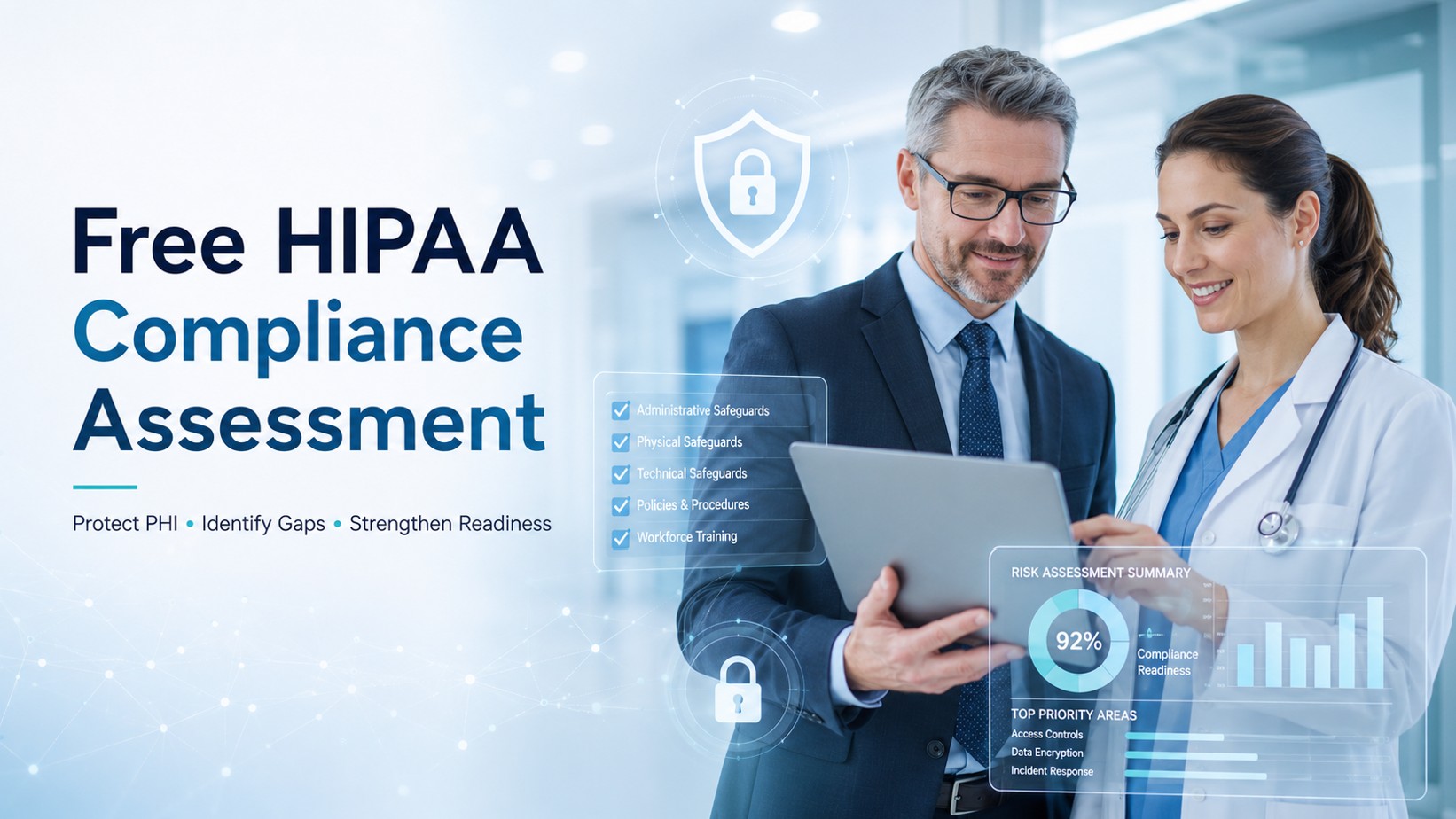
The engagement focuses on the controls, documentation, evidence, and risk decisions that healthcare leaders, office managers, IT teams, and business associates need to manage HIPAA security responsibilities.
Review systems, PHI workflows, policies, access controls, vendors, backups, remote access, and security monitoring.
Prioritize fixes by risk, business impact, patient data exposure, operational effort, and audit readiness value.
Organize policy evidence, training records, risk decisions, vendor notes, control status, and corrective actions.
Assess identity, permissions, MFA, encryption, audit logs, email security, endpoint security, firewall, VPN, and cloud settings.
Prepare HIPAA breach notification and incident response procedures, breach documentation workflows, backup recovery planning, and escalation steps. Leadership should also understand HIPAA penalties, breach costs, and cyber risk when prioritizing safeguards.
Work with a cybersecurity consultant who understands healthcare, PHI protection, and Southern California business operations.
Each package has a defined starting scope and deliverables. Final pricing is confirmed in writing after a no-cost scoping conversation that considers locations, workforce size, systems, ePHI flows, vendors, evidence maturity, technical testing, and the depth of reporting required.
Best for: A small healthcare practice or business associate that needs a focused current-state review before committing to a deeper risk analysis.
Typical delivery: Two to three weeks after requested information is available.
Starting scope: One organization, one location, up to 25 workforce members, and a focused review of up to 10 core systems or vendors.
Best for: A practice, clinic, dental office, or business associate that needs a documented security risk analysis and a risk-based remediation roadmap.
Typical delivery: Four to six weeks after requested information and access are available.
Starting scope: One organization, up to two locations, up to 75 workforce members, and up to 25 in-scope systems or vendors.
Best for: An organization that needs risk analysis, evidence organization, policy-to-control mapping, deeper technical validation, and structured readiness support.
Typical delivery: Six to ten weeks, depending on evidence readiness and technical scope.
Starting scope: One organization, up to three locations, up to 150 workforce members, and up to 40 in-scope systems or vendors.
Best for: An organization that needs recurring security governance and leadership support after the initial assessment or risk analysis.
Typical structure: Up to four advisory hours per month with a three-month initial term.
Scope note: Remediation labor, managed IT, 24/7 incident response, legal services, and third-party products are scoped separately.
Important pricing and scope note: Starting prices assume timely access to the agreed stakeholders and evidence. Multi-entity environments, extensive travel, large technical estates, accelerated schedules, deep configuration testing, penetration testing, remediation implementation, legal review, and third-party fees require a separate written scope.
These services support HIPAA security readiness and risk management. They do not provide legal advice, a regulatory determination, certification, attestation, or a guarantee of compliance. The free tools and initial consultation are for guidance and scoping only and do not replace a professional cybersecurity audit, compliance assessment, penetration test, or legal or compliance review.
A focused video briefing for leaders and IT teams working through this page.
HIPAA Compliance Video Series · Episode 02
Use this concise briefing alongside the guidance on this page to connect hipaa program readiness with clear evidence, accountable ownership, and a practical next action.
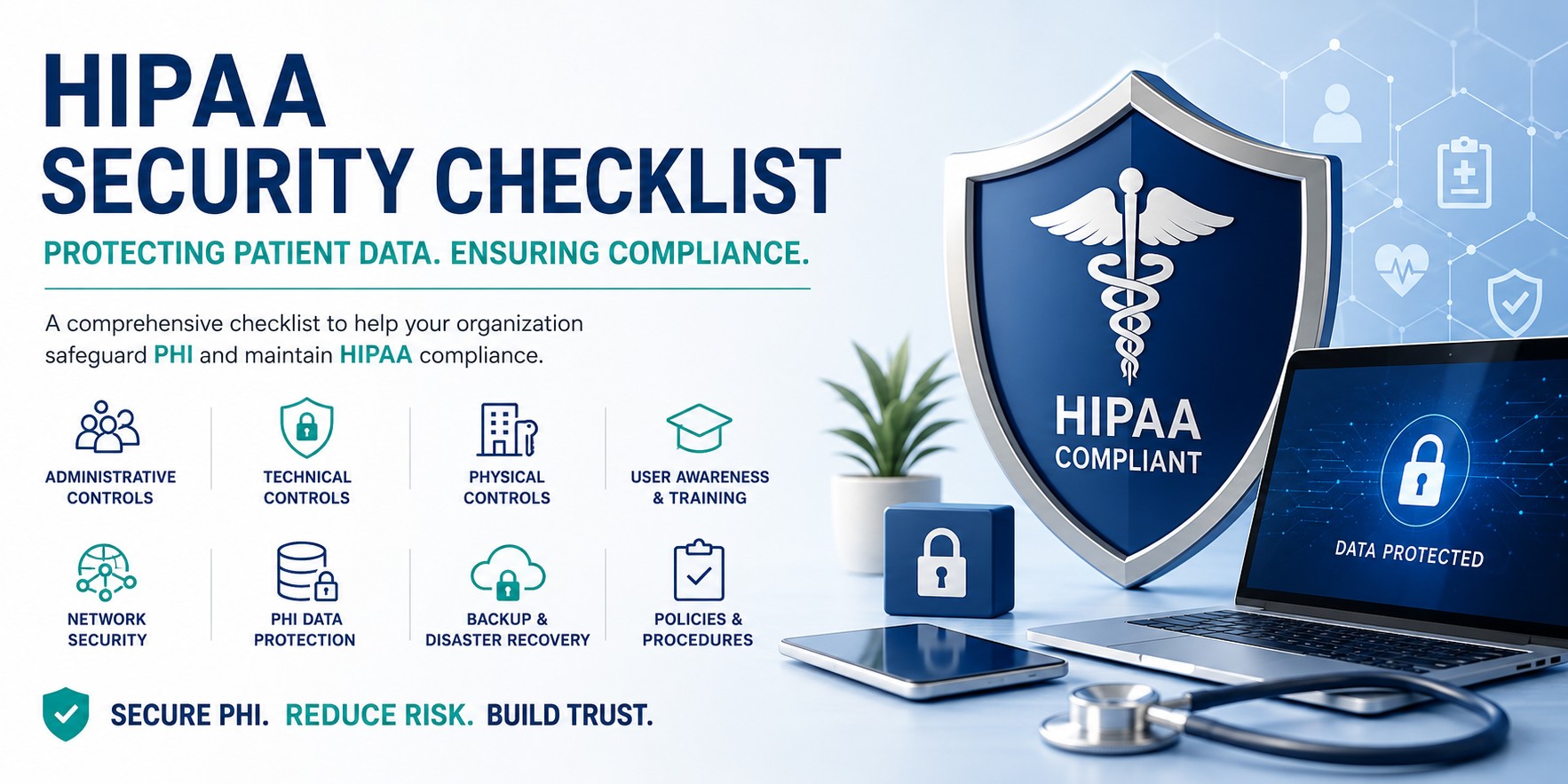
OC Security Audit organizes HIPAA work around the safeguard areas that affect PHI security, privacy, monitoring, access, training, and incident readiness.
Create the governance, procedures, workforce accountability, policy maintenance, risk assessment, training, and corrective action records needed to manage PHI securely.
Protect facilities, workstations, mobile devices, backup media, and other systems that access, transmit, or store electronic PHI.
Implement and validate the technology controls used to protect PHI across users, systems, applications, cloud services, networks, and vendors.
Ongoing monitoring helps identify unauthorized access, system weaknesses, risky activity, and PHI exposure before they become serious incidents. A stronger HIPAA program includes vulnerability scanning, periodic control reviews, vendor and business associate risk review, and documented remediation.
Review systems, policies, access controls, workflows, PHI handling practices, vendors, backups, training, and documentation.
Document security gaps, compliance issues, vulnerabilities, business associate risks, and missing evidence.
Create a remediation roadmap based on patient data risk, operational impact, compliance urgency, and available resources.
Support monitoring, documentation, training, control validation, audit readiness, and periodic reassessment.
Any medical-related organization that creates, receives, maintains, or transmits PHI may be required to comply, including covered entities and business associates.
Care delivery settings that create, receive, maintain, or transmit PHI.
Dental records, imaging, billing, scheduling, and patient communications.
Therapy notes, intake forms, portals, telehealth, and sensitive PHI workflows.
Treatment documentation, referrals, insurance records, and patient files.
Orders, results, diagnostic images, reports, and clinical integrations.
Claims, payment records, eligibility checks, and revenue cycle data.
Systems, backups, user access, support tools, and infrastructure touching ePHI.
Remote care, video visits, messaging, patient portals, and stored session data.
EHR, practice management, imaging, analytics, and connected healthcare apps.
OC Security Audit supports HIPAA security assessments, cybersecurity audits, vulnerability scanning, PCI and ISO-aligned security reviews, vCISO services, incident response, backup and disaster recovery planning, and network security monitoring for organizations in Irvine, Newport Beach, Costa Mesa, Anaheim, Huntington Beach, Mission Viejo, Laguna Niguel, Santa Ana, Tustin, Orange, Los Angeles County, and Southern California.
Medical practices, dental offices, clinics, and specialty providers that need PHI safeguards and audit evidence.
Vendors, IT providers, billing firms, software vendors, and service providers that touch healthcare data.
Review how Microsoft 365, Azure, email, identity, backups, devices, and sharing settings affect PHI protection.
Organize evidence, policies, training records, risk assessment results, and corrective action plans before they are requested.

Ali Hassani brings 25+ years of IT, cybersecurity, compliance, Microsoft infrastructure, network security, and healthcare IT experience to HIPAA readiness work. The goal is to help healthcare organizations understand their real PHI exposure, strengthen technical safeguards, and build evidence that can survive a serious review.
When HIPAA readiness work identifies gaps in identity, endpoint security, Microsoft 365, backup, network segmentation, monitoring, or documentation, IT Perfection can support the technical implementation path through managed IT, co-managed IT, Microsoft 365 administration, backup and disaster recovery, endpoint support, and network infrastructure help.
Continue with the HIPAA Security Rule Safeguards Assessment Matrix or compare broader risk through the Cybersecurity Risk Assessment for Orange County Businesses.
When findings require implementation support, review Healthcare IT Support, Microsoft 365 Managed Services, Backup and Disaster Recovery Support, and Managed IT Services.
No. This page and any initial readiness review are for cybersecurity and compliance planning guidance only. They do not replace legal advice, a regulatory determination, or a formal legal compliance review.
Yes. Small healthcare and dental practices often need practical help mapping PHI workflows, improving Microsoft 365 and endpoint controls, organizing evidence, and prioritizing remediation without turning the process into paperwork only.
Useful evidence includes asset lists, user access lists, policies, training records, vendor and business associate agreements, backup proof, incident response procedures, risk assessment notes, audit logs, and remediation records.
Start with the Free HIPAA Security Checklist and the HIPAA Security Readiness Assessment, then request a professional review when you need evidence, prioritization, and remediation guidance.
A focused video briefing for leaders and IT teams working through this page.
HIPAA Compliance Video Series · Episode 06
Use this concise briefing alongside the guidance on this page to connect hipaa risk analysis with clear evidence, accountable ownership, and a practical next action.
OC Security Audit can help your healthcare or dental organization review safeguards, organize evidence, identify technical gaps, and prioritize remediation before audit pressure or an incident forces the issue.
Use the path that matches your current question. The guided HIPAA resource center provides a clear orientation, the assessment tools help identify possible gaps, and the professional service path turns important findings into an evidence-based scope and remediation roadmap.
Visit the HIPAA Guidance Center for a concise starting point, then follow the Five-Step HIPAA Readiness Path to connect scope, safeguards, evidence, and recurring review.
If leadership needs context about possible consequences, continue with the HIPAA Enforcement Overview.
The 2-Minute HIPAA Readiness Quick Check provides a fast private screen. For broader coverage across administrative, physical, and technical safeguards, complete the HIPAA Security Readiness Assessment.
When a self-check identifies gaps, schedule a free HIPAA scoping conversation to discuss evidence, systems, vendors, locations, and priorities.
When the need is already clear, compare the HIPAA service packages and choose the smallest appropriate starting scope.
Clarify what HIPAA means for healthcare businesses and who must comply with HIPAA. For rule-level planning, review HIPAA Rules Explained, the HIPAA Documents and Evidence Checklist, and HIPAA Policies and Procedures. If gaps are already known, use the Most Ignored HIPAA Security Requirements and the HIPAA Compliance Roadmap to organize remediation priorities.
This website uses essential cookies for security and operation. Optional analytics and advertising cookies help measure site use and outreach. Choose Allow or Deny. You can change your choice at any time.