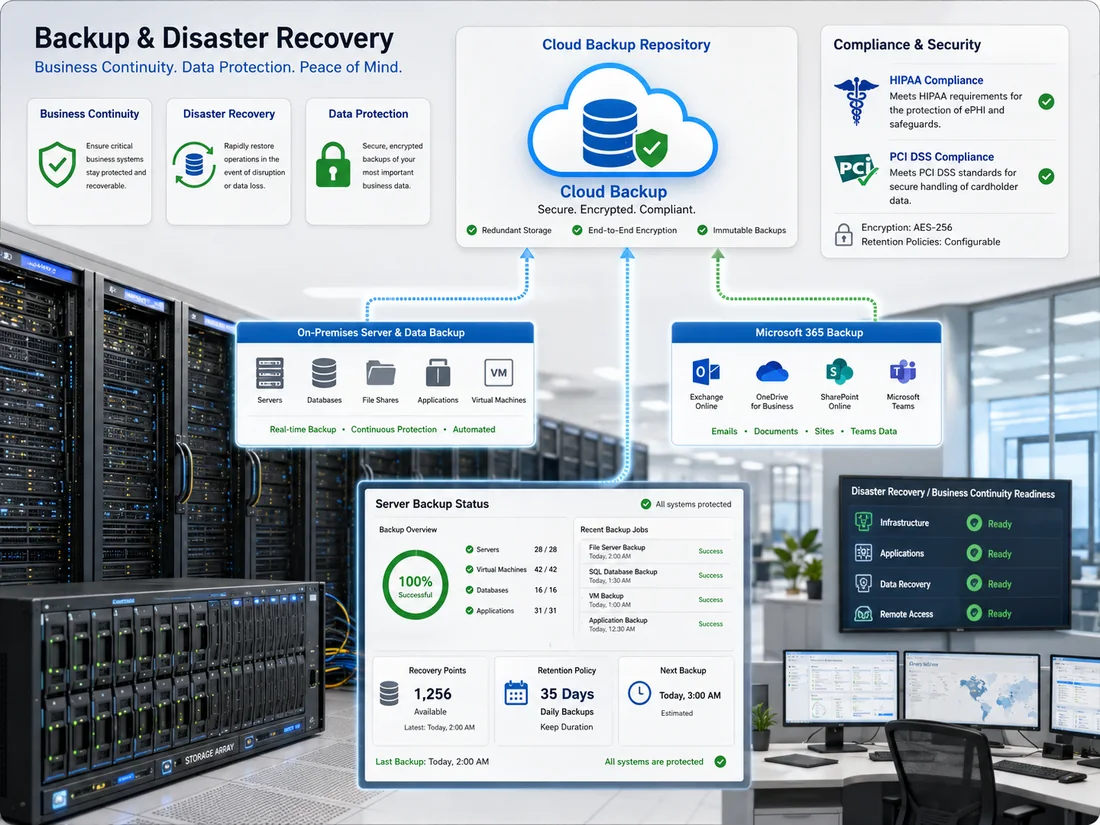
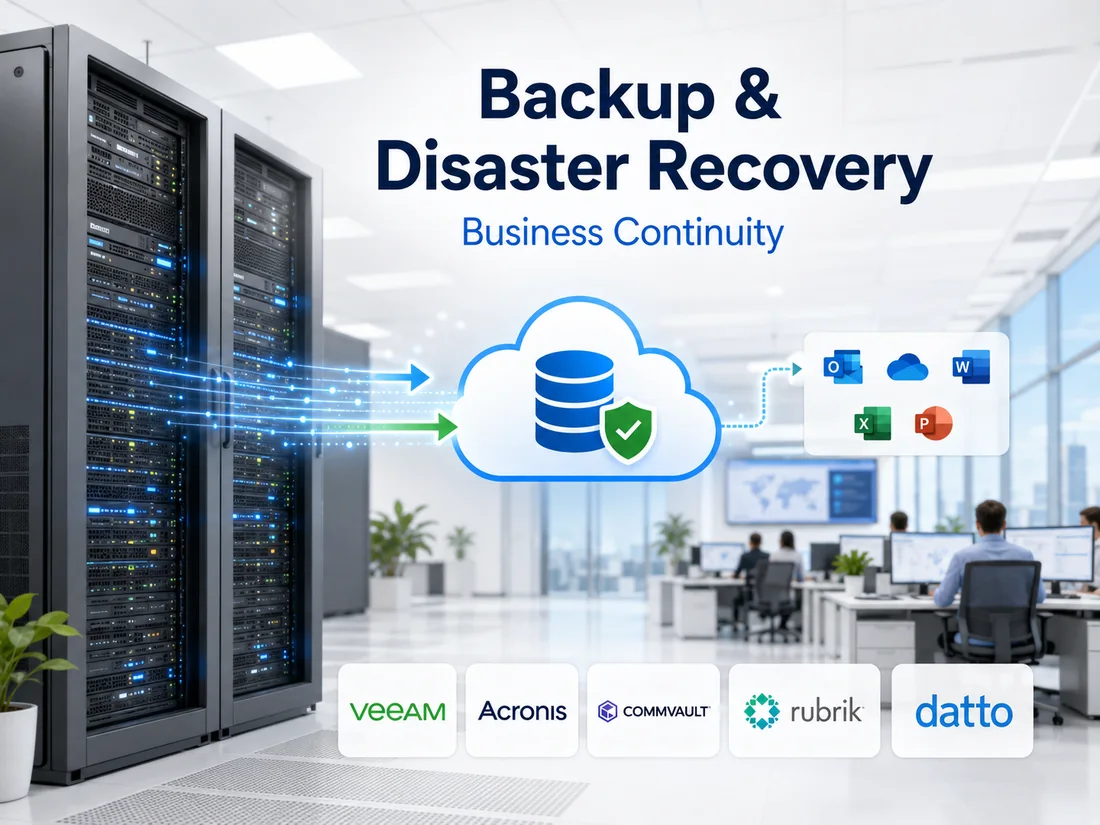
Backup and Disaster Recovery Internal Audit Assessment
Use this backup and disaster recovery internal audit to identify gaps across asset and authentication coverage, finding validation and false positives, and exploitability and business context. Treat the result as initial guidance and validate material findings through a professional review.
CISO-led guidance from Ali Hassani, backed by 25+ years of IT, cybersecurity, compliance, and infrastructure experience.
Start with a practical backup and recovery readiness check
OC Security Audit helps businesses evaluate cybersecurity risk, backup resilience, disaster-recovery readiness, compliance preparation, and operational continuity across Orange County, Los Angeles County, and Southern California.
Ali Hassani, CISO, brings 25+ years of hands-on IT and cybersecurity experience and has supported security audits, implementations, and operational improvements across dozens of business networks.
This free self-assessment is designed for business owners, executives, IT managers, IT administrators, compliance teams, and technology providers who want a practical starting point before a professional review.
CISSPCCISOMCSEMCSA SecurityMCITPCCNACCNP
5–10 minutesTypical completion time
50 questionsSimple controlled selections
7 categoriesSecurity domains reviewed
Instant reportOn-page charts and priorities
Backup coverage and recovery visibility
Review on-premises servers, cloud repositories, Microsoft 365 workloads, retention, encryption, immutable copies, and recovery status.
Restore readiness and operational continuity
Evaluate whether backup copies, cloud recovery, retention, restore testing, and business-continuity procedures work together as a practical recovery strategy.
Important disclaimer. This free Backup and Disaster Recovery Readiness Assessment is an introductory informational tool provided by OC Security Audit. It is not a formal audit, disaster-recovery test, business-impact analysis, penetration test, vulnerability scan, legal opinion, compliance determination, insurance representation, certification, attestation, guarantee, or substitute for professional advice. Results depend entirely on the answers selected. Do not make backup, retention, cloud, network, account, vendor, or disaster-recovery changes solely because of this tool. Consult a qualified cybersecurity consultant, appropriate vendors, and legal or compliance advisors before taking action. To the maximum extent permitted by applicable law, OC Security Audit and its representatives disclaim liability for decisions, changes, outages, losses, or outcomes arising from use of this tool.
OC Security Audit free assessment tools
Backup and Disaster Recovery Readiness Assessment Report
This introductory report is generated locally in your browser from controlled selections. No information is submitted to OC Security Audit.
0%
Preliminary risk level
Executive summary
Optional context selected
No optional context was selected.
Assessment analytics
0Critical priorities
0High priorities
0Medium priorities
0Questions answered
Risk level by assessment category
Highest-priority areas to validate
Recommended next steps
1. Confirm critical systems, business dependencies, RTOs, RPOs, owners, vendors, and recovery priorities.
Ali Hassani, CISO, brings 25+ years of hands-on IT and cybersecurity experience. For a professional backup and disaster-recovery readiness consultation, call 949-777-5567 or visit ocsecurityaudit.com.
Final disclaimer and limitation of liability. This report is a free, preliminary backup and disaster-recovery readiness summary provided by OC Security Audit. It is not a formal audit, disaster-recovery test, business-impact analysis, penetration test, vulnerability scan, forensic investigation, legal opinion, compliance determination, insurance representation, certification, attestation, guarantee, or professional-services engagement. It may be incomplete or inaccurate because it is based only on self-reported selections and does not review systems, configurations, repositories, backup jobs, recovery points, vendor contracts, evidence, logs, policies, legal obligations, or actual restore performance. Do not implement changes solely because of this report. Always consult qualified cybersecurity, technology, legal, compliance, insurance, and vendor advisors. To the maximum extent permitted by applicable law, OC Security Audit, its representatives, and related parties disclaim liability for any action, inaction, decision, outage, loss, cost, damage, or outcome arising from or related to this tool or report.
This website uses essential cookies for security and operation. Optional analytics and advertising cookies help measure site use and outreach. Choose Allow or Deny. You can change your choice at any time.
Essential
Always active
The technical storage or access is strictly necessary for the legitimate purpose of enabling the use of a specific service explicitly requested by the subscriber or user, or for the sole purpose of carrying out the transmission of a communication over an electronic communications network.
Preferences
The technical storage or access is necessary for the legitimate purpose of storing preferences that are not requested by the subscriber or user.
Analytics
The technical storage or access that is used exclusively for statistical purposes.The technical storage or access that is used exclusively for anonymous statistical purposes. Without a subpoena, voluntary compliance on the part of your Internet Service Provider, or additional records from a third party, information stored or retrieved for this purpose alone cannot usually be used to identify you.
Advertising
The technical storage or access is required to create user profiles to send advertising, or to track the user on a website or across several websites for similar marketing purposes.

 CISSPCCISOMCSEMCSA SecurityMCITPCCNACCNP