
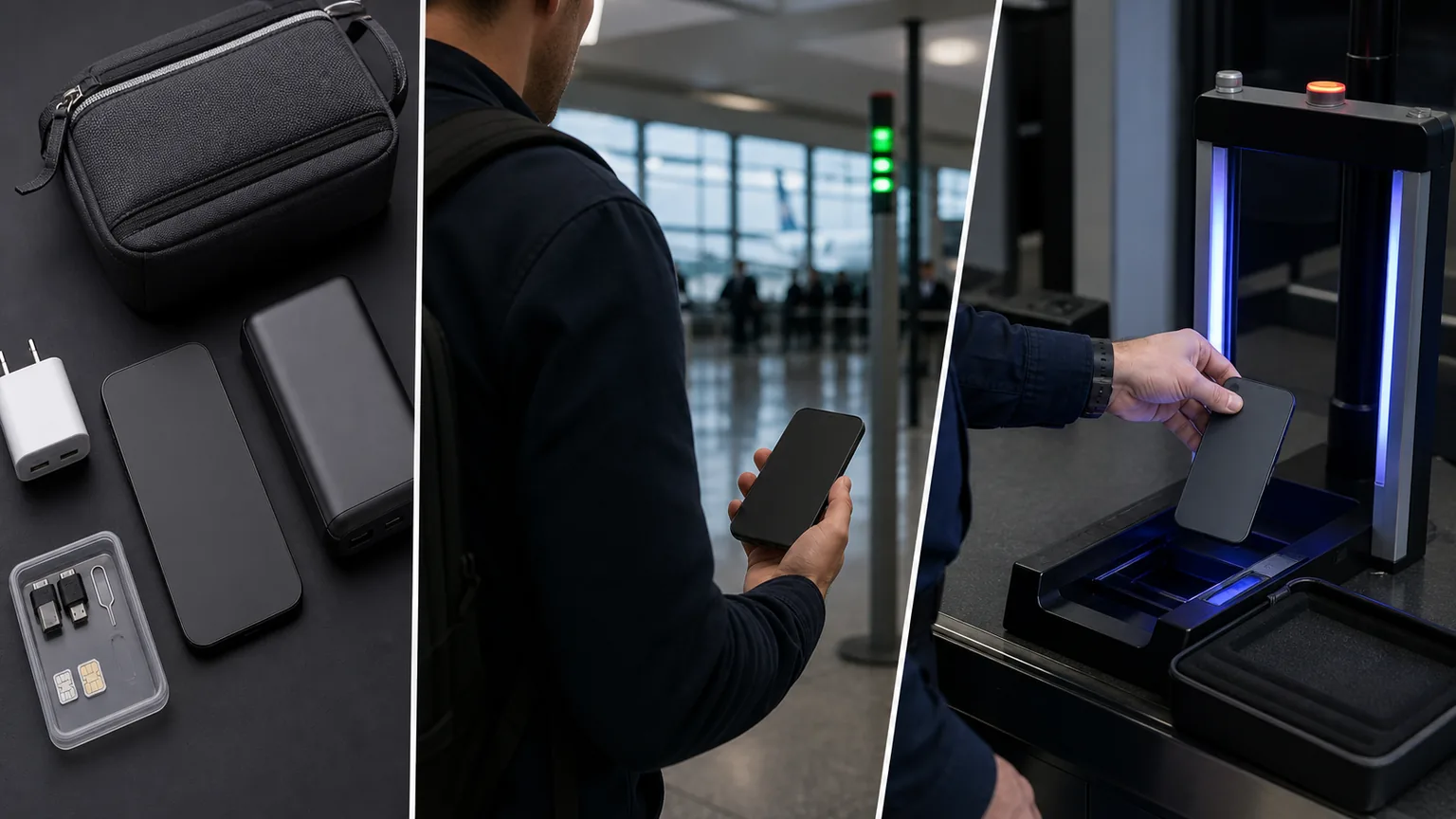
Secure Business Travel With an iPhone: Before, During, and After
Use a business iPhone travel playbook for data minimization, updates, connectivity, physical control, incident response, and post-travel review.
Find exposure, strengthen essential controls, and build practical resilience around the systems your organization depends on.
Explore cybersecurity services →Evaluate controls independently, document defensible findings, and focus remediation on the risks with the greatest operational impact.
Explore security audits →Translate security obligations into clear evidence, accountable remediation, and a practical path toward audit or customer readiness.
Explore compliance services →Bring security governance, risk decisions, leadership communication, and improvement planning into one accountable executive program.
Explore vCISO services →
Cybersecurity Audit
Plan oc security audit cybersecurity intelligence center with authorized scope, clear criteria, reliable evidence, reproducible testing, and findings that leadership and technical teams can act on.
CISO-led guidance from Ali Hassani, backed by 25+ years of IT, cybersecurity, compliance, and infrastructure experience.
Review the newest incident briefs, threat analysis, technology guidance, compliance developments, and executive cybersecurity insights.
Use a business iPhone travel playbook for data minimization, updates, connectivity, physical control, incident response, and post-travel review.


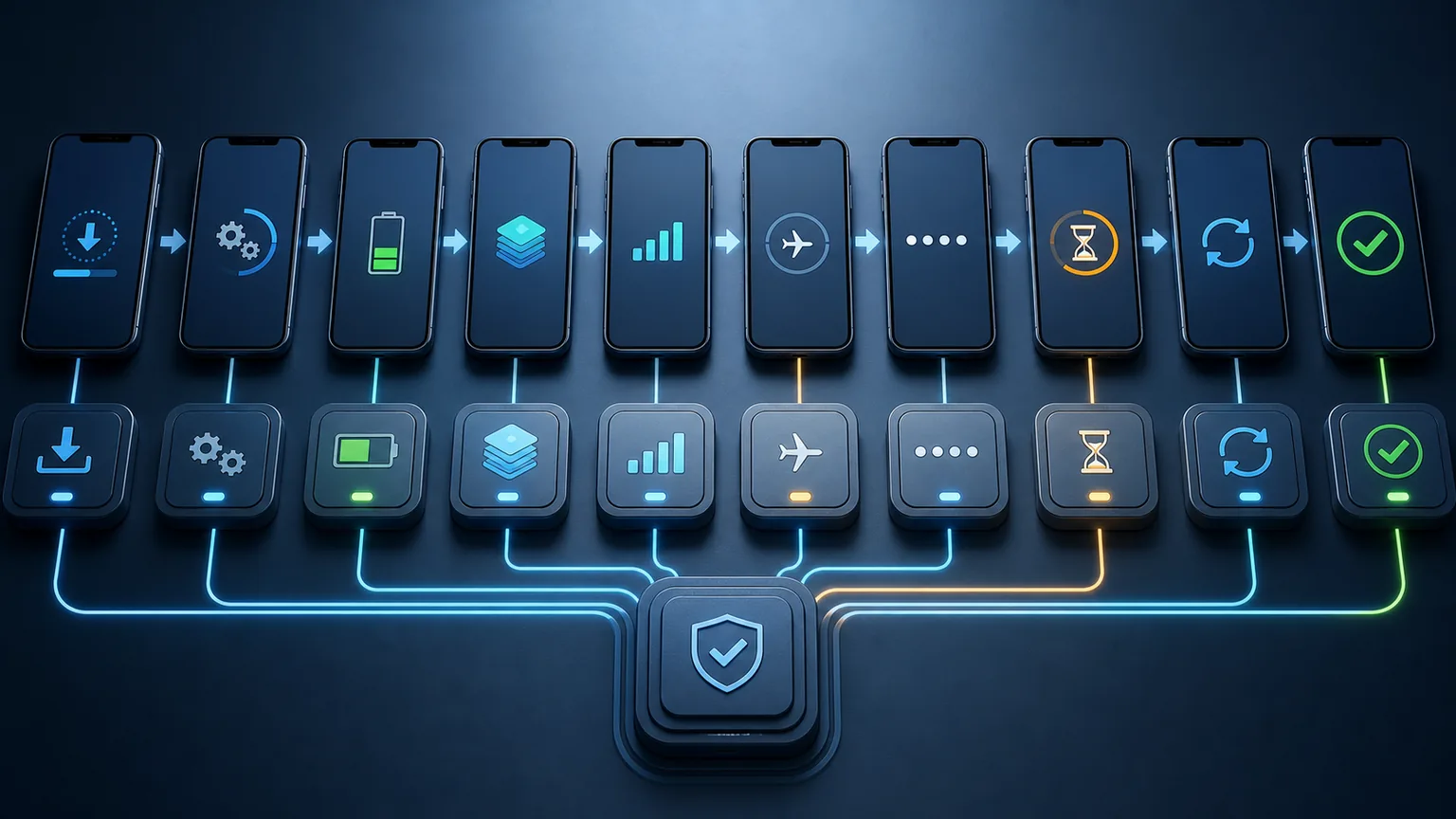


The tracker is designed to distinguish verified disclosures from allegations, developing investigations, corrections, and facts that have not been publicly confirmed.

Organization, industry, disclosure date, attack type, reported impact, status, and last-updated information appear only when the supporting article clearly documents the evidence and its limitations.
Use a focused set of editorial topics to find incident analysis, defensive guidance, technology explanations, compliance developments, executive direction, and local business context.
Individual analysis of significant publicly reported ransomware, data breach, identity, cloud, email, supply-chain, and operational disruption events. Each brief distinguishes confirmed facts from claims and connects the incident to practical controls.

Concise weekly synthesis of significant incidents that do not require separate long-form coverage. Roundups emphasize recurring attack patterns, industries affected, important unknowns, and defensive priorities.

Analysis of exploited vulnerabilities, active threats, ransomware methods, phishing techniques, security advisories, and vendor alerts. Guidance reflects authoritative severity data and adds business exposure and remediation context.

Practical explanations of identity security, cloud protection, endpoint detection, automation, passwordless authentication, Zero Trust, and AI-assisted analysis. Coverage considers value, limits, cost, operations, and implementation requirements.

Relevant developments involving HIPAA, PCI DSS, NIST CSF, ISO 27001, SOC 2, IRS WISP, cyber insurance, California requirements, privacy, governance, and evidence expectations. Coverage explains what leaders may need to review.

Cybersecurity governance, risk registers, board reporting, budgeting, vendor risk, incident preparation, policy, insurance readiness, and security strategy. The focus is clear executive decision-making supported by technical reality.

Useful cybersecurity context for healthcare practices, professional services, manufacturers, construction and engineering firms, nonprofits, and other Southern California organizations. Global incidents are translated into local operational questions.
Severity matters, but so do internet exposure, exploit activity, asset criticality, compensating controls, patch readiness, and the consequence of disruption.
Verify affected versions, asset reachability, exploitation evidence, critical business dependencies, compensating controls, and the operational risk of remediation.
New technology is useful when it improves visibility, reduces exposure, supports reliable response, fits the operating model, and produces evidence leaders can trust.
Useful technology analysis explains what a control can and cannot do, the data and staffing it requires, how it fits existing systems, and which configuration or operational failure modes remain.
Use this guided path to understand what different AI systems can do, compare platforms, protect business information, establish acceptable use, evaluate providers, and train each role for responsible operation.

Begin here when your organization needs one security-first map connecting AI selection, governance, Microsoft 365, cloud, networks, websites, workforce skills, and measurable outcomes.
Each pathway answers a different decision, so leaders can move directly to the issue in front of them without treating every AI project as the same risk.

Clarify the difference between an assistant, a copilot, an agent, an API workflow, and a private model before assigning data access or authority.

Evaluate ChatGPT, Microsoft Copilot, Gemini, Claude, and Perplexity using consistent questions about identity, data, administration, integration, and evidence.

Separate public experimentation from governed enterprise use by reviewing retention, training use, access controls, connectors, logging, and administrative visibility.

Define what may be entered, shared, automated, approved, retained, and published so useful experimentation does not become uncontrolled disclosure or decision-making.

Examine model hosting, subprocessors, retention, data rights, security evidence, incident duties, export, deletion, and operational dependency before approval.

Give executives, employees, IT, security, compliance, and developers different practice based on their authority, data access, responsibilities, and expected evidence.
Use the four-step review for an individual device, then move into fleet governance, BYOD, data protection, incident response, high-risk-user safeguards, update management, or travel controls when the business context requires deeper validation.
Check Safety Check, App Privacy Report, VPN and Device Management, and Apple Account sign-in security with the professional iPhone security checklist.
Define the minimum control set with the business iPhone security baseline, then review Apple Business Manager and MDM hardening.
Use Apple User Enrollment for BYOD privacy boundaries and test Managed Open In and per-app VPN controls.
Coordinate reporting and containment with the lost or stolen business iPhone playbook, and evaluate Lockdown Mode for high-risk users.
Follow the Apple threat-notification response playbook and preserve options with the suspected iPhone spyware response guide.
Set tested update deadlines with the business iPhone update program and reduce travel exposure with the business iPhone travel playbook.
When device findings reveal broader identity, data-protection, policy, or evidence gaps, compare them with the scope of a Security Audit or Compliance readiness review. For executive context, review Ali Hassani’s experience; for a prioritized assessment, contact OC Security Audit.
A significant incident is most useful when it prompts a disciplined review of the same control areas, dependencies, and response assumptions inside your own environment.
Review whether current controls and evidence still support applicable obligations and audit expectations.
Evaluate whether comparable weaknesses exist across identity, endpoints, infrastructure, cloud services, and operations.
Check privileged access, Conditional Access, logging, sharing, workload configuration, and recovery readiness.
Validate external exposure, remote access, segmentation, rule governance, administration, and logging.
Confirm responsibilities, escalation, evidence preservation, communications, recovery dependencies, and decision authority.
Translate technical findings into risk ownership, priorities, budget decisions, and accountable follow-through.
When findings require hands-on remediation or ongoing administration, co-managed IT support, Microsoft 365 implementation support, and Azure operational support through IT Perfection can help move approved security recommendations into technical implementation.
Follow the control path that matches the decision in front of you: examine Microsoft 365 identity and phishing paths, build an incident-response operating sequence, prepare healthcare downtime workflows, validate PCI DSS payment-page evidence, govern AI security decisions, or map Orange County manufacturing recovery dependencies.
OC Security Audit uses reliable public sources, separates confirmed facts from claims and estimates, identifies material unknowns, and updates analysis when important facts change.

Ali Hassani is based in Irvine, California and brings 25+ years of IT, cybersecurity, compliance, infrastructure, and CISO experience to the Intelligence Center. His background helps connect public incident facts to the identity, network, cloud, endpoint, audit, governance, and operational controls organizations should review.

Organizations in Irvine, Orange County, Los Angeles County, and Southern California depend on many of the same identity platforms, cloud services, software suppliers, network appliances, payment processes, and connected systems affected by national and international incidents.
The useful question is not whether another organization looks exactly like yours. It is whether the same access path, configuration weakness, vendor dependency, or recovery limitation exists in your environment—and whether your team can detect, contain, and recover from it.
Understanding an incident is only the first step. OC Security Audit helps organizations evaluate whether similar weaknesses exist in their own environment and prioritize practical improvements.
This website uses essential cookies for security and operation. Optional analytics and advertising cookies help measure site use and outreach. Choose Allow or Deny. You can change your choice at any time.