
Threats and Vulnerabilities
How iPhone Zero-Click Attacks Evolved From FORCEDENTRY to BLASTPASS
Compare FORCEDENTRY and BLASTPASS iPhone zero-click cases, source evidence, Apple fixes, defensive evolution, Lockdown Mode, updates, and business controls.
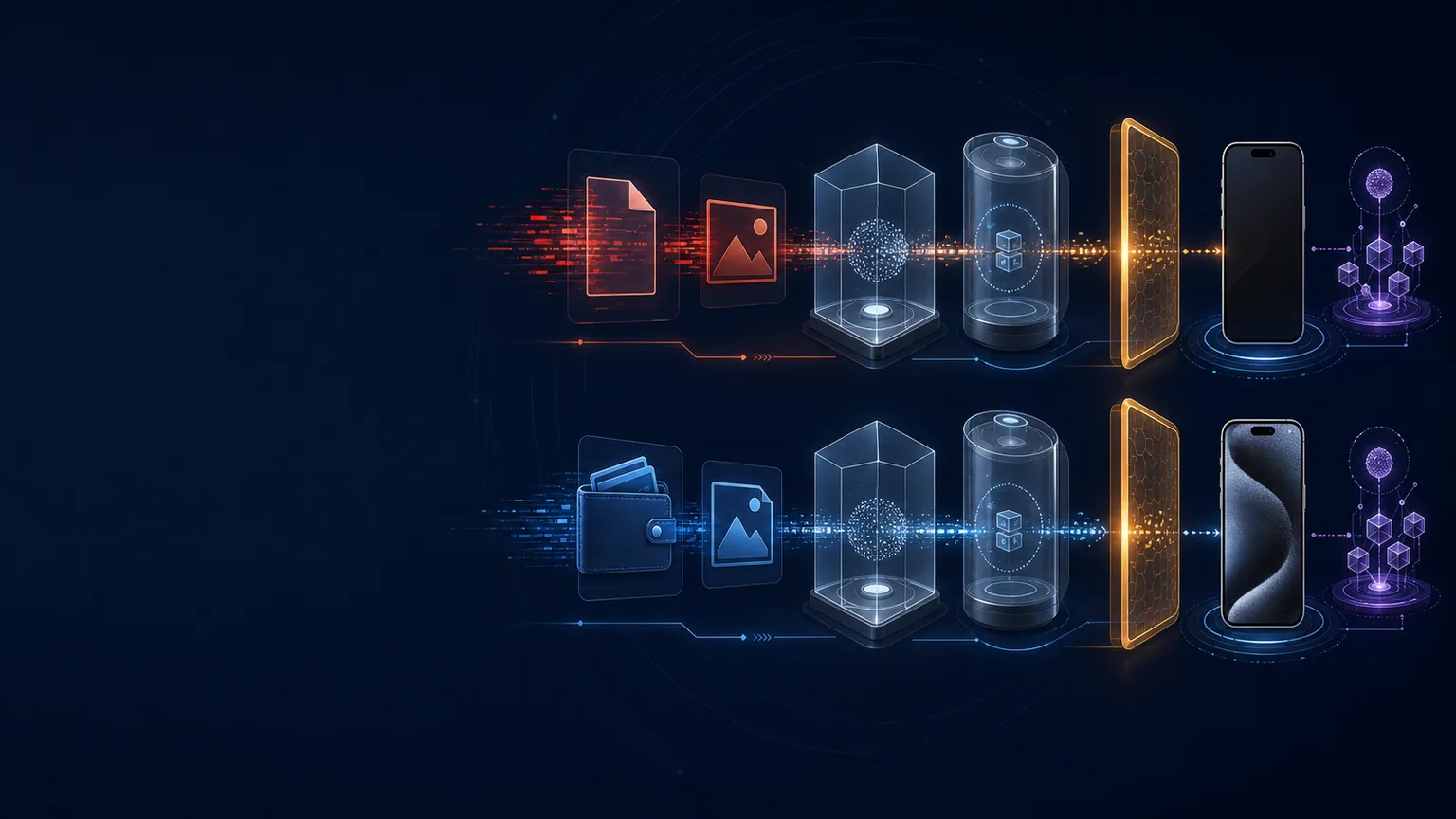
iPhone zero-click attacks challenge a familiar security assumption: that compromise requires the user to click a link, open a file, install an app, or approve a prompt. In two widely studied historical cases, Citizen Lab reported that FORCEDENTRY and BLASTPASS used message-delivered content to exploit iPhones without target interaction. Apple issued fixes for the associated vulnerabilities, and Google Project Zero independently analyzed FORCEDENTRY.
These cases do not show that every iPhone user faces the same risk or that awareness training is useless. They show why defense must also include platform engineering, rapid updates, attack-surface reduction, high-risk-user programs, authentic threat-notification response, identity monitoring, evidence preservation, and careful communication.
Comparison at a glance
| Case | Public report | Reported delivery and affected context | Vendor fix |
|---|---|---|---|
| FORCEDENTRY | Citizen Lab, September 2021; Project Zero technical analysis, December 2021 | Citizen Lab reported an iMessage zero-click exploit against then-current Apple devices, involving maliciously crafted content and CVE-2021-30860 | Apple addressed CVE-2021-30860 in iOS/iPadOS 14.8 and related updates |
| BLASTPASS | Citizen Lab, September 2023 | Citizen Lab reported malicious PassKit attachments with images sent through iMessage against iOS 16.6, using CVE-2023-41061 and CVE-2023-41064 | Apple addressed both CVEs in iOS/iPadOS 16.6.1 |
The table is historical. It is not a list of versions that are safe today and not a complete catalog of zero-click activity.
FORCEDENTRY: a reported bypass of an earlier defensive layer
Citizen Lab’s FORCEDENTRY report states that researchers captured an iMessage zero-click exploit while analyzing an iPhone associated with a Saudi activist. Citizen Lab attributed the exploit to NSO Group’s Pegasus spyware, said it had been in use since at least February 2021, and tied it to CVE-2021-30860.
Citizen Lab described FORCEDENTRY as circumventing BlastDoor, an iMessage isolation protection introduced by Apple. Apple’s iOS 14.8 advisory states that processing a maliciously crafted PDF could lead to arbitrary code execution and that Apple was aware the issue may have been actively exploited.
Google Project Zero later published a technical analysis of FORCEDENTRY, thanking Citizen Lab for the sample and Apple for collaboration. The analysis provides independent technical scrutiny of the captured exploit. This article intentionally avoids exploit detail that is unnecessary for defense.
BLASTPASS: a different delivery route and another patch cycle
Two years later, Citizen Lab’s BLASTPASS report described a chain using PassKit attachments containing malicious images sent through iMessage. The researchers reported that it could compromise an iPhone running iOS 16.6 without interaction and attributed its use to NSO Group’s Pegasus spyware.
Apple’s iOS 16.6.1 advisory lists CVE-2023-41064 in ImageIO and CVE-2023-41061 in Wallet, with possible active-exploitation statements for both. Citizen Lab also said it believed Lockdown Mode blocked the attack.
The BLASTPASS page in this Intelligence Center provides a focused business analysis of the 2023 chain. This comparative article instead examines what changed and what remained necessary across the two cases.
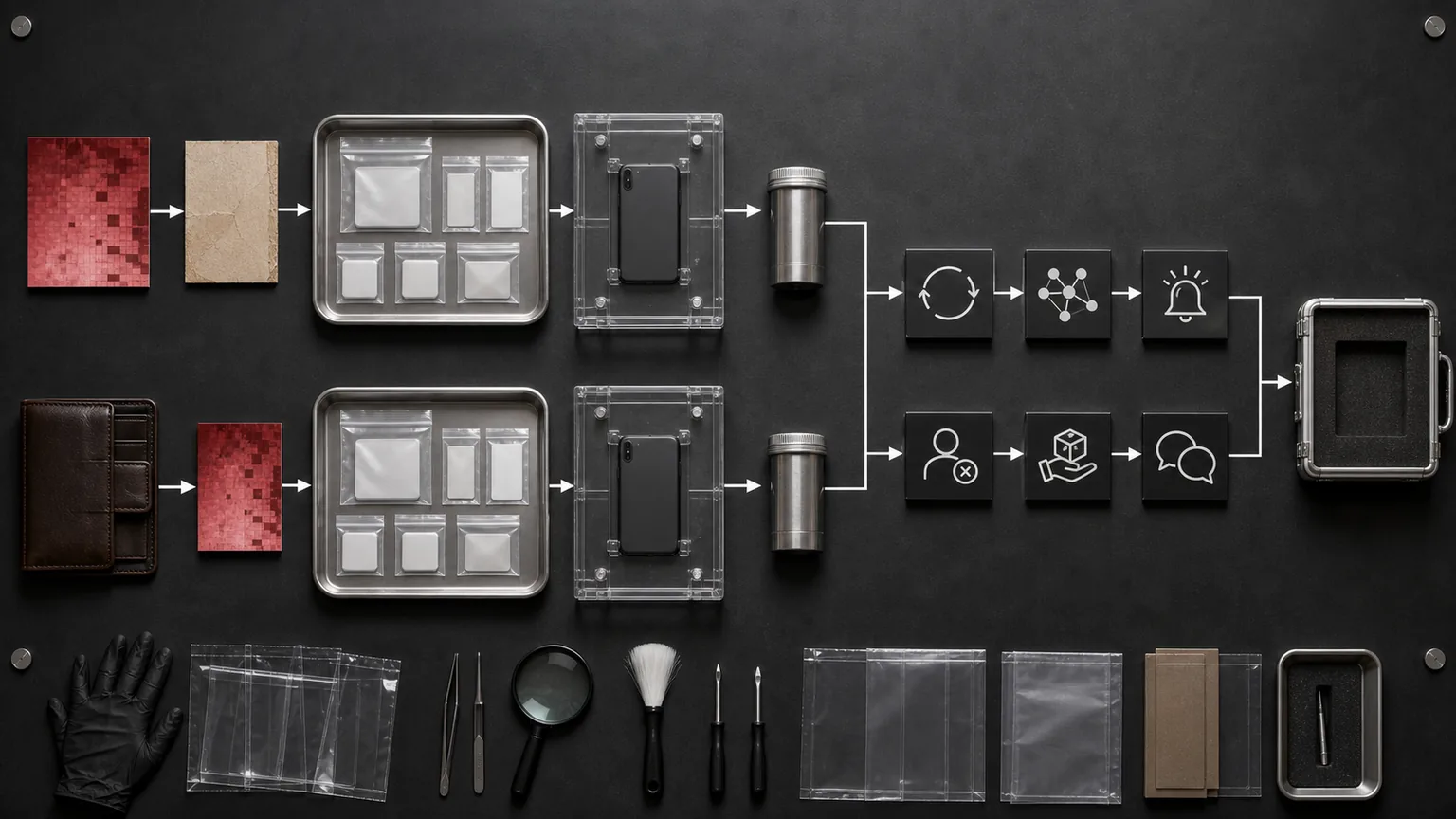
What evolved between the cases
Attackers adapted to platform defenses
Citizen Lab framed FORCEDENTRY as a response that bypassed BlastDoor. BLASTPASS later used a reported PassKit and image-processing path. This pattern illustrates a general defensive reality: a mitigation can eliminate or constrain one route while well-resourced attackers search for another reachable parser, attachment type, service, or trust boundary.
The lesson is not that mitigations fail. Isolation, safer parsing, memory protections, code signing, sandboxing, and reduced feature exposure increase attacker cost and can block known techniques. The lesson is to combine them with updates and response instead of treating one control as final.
Public evidence became a multi-source record
Both cases involved researcher findings and Apple advisories. FORCEDENTRY also received detailed Project Zero analysis. A mature intelligence process separates these roles:
- the affected vendor confirms vulnerability scope and releases fixes;
- researchers report forensic observations and attribution conclusions;
- independent analysts may validate technical characteristics; and
- organizations decide how the evidence affects their own inventory and risk.
Do not turn repeated reporting of one original claim into independent corroboration. Link to the underlying primary record.
Apple added an exceptional-risk mode
Apple introduced Lockdown Mode after FORCEDENTRY and before BLASTPASS. Apple describes it as an extreme optional protection for people at risk of highly sophisticated attacks. Citizen Lab believed it blocked BLASTPASS.
That is meaningful defensive evidence, but not a universal guarantee. The Lockdown Mode guide for executives explains how to select users, test functional impact, record exceptions, and maintain support.
What did not change
Current software remains essential
Each public case led to a vendor update. An organization needs a process that turns an advisory into an affected-device query, deadline, support plan, enforcement action, exception decision, and verified build result. Use the business iPhone update-management guide and verify current releases with Apple—not historical numbers in this article.
User training cannot stop every delivery path
Training still reduces phishing, credential theft, malicious installation, unsafe sharing, and support fraud. But a zero-click report means the user may have no suspicious action to avoid. Security leaders should not blame a target for failing to detect an invisible delivery.
High-risk users need a defined service
Organizations should know who might face exceptional targeting and how to support them. The program should cover device updates, Lockdown Mode evaluation, Apple Account security, trusted communications, travel, assistants, administrative access, replacement devices, specialist escalation, and personal safety.
The secure iPhone business travel guide and Apple Account security-key guide provide related operational controls.
Evidence and identity response remain separate workstreams
A phone can be locked or erased while cloud sessions remain active. Conversely, revoking sessions does not preserve device evidence. The incident lead must coordinate forensic, device, identity, application, carrier, safety, communications, legal, and recovery decisions.
Use the suspected iPhone spyware response guide and the Apple threat-notification response guide before improvising during a high-risk case.
What an ordinary iPhone app cannot prove
iOS application isolation prevents a normal App Store app from freely inspecting every process, kernel area, system service, and private data container. A mobile security app may provide valuable network, configuration, or device signals, but “no alert” is not proof of no sophisticated compromise.
The iPhone Security Review Checklist can identify visible account, privacy, profile, and management concerns. It is initial guidance, not a zero-click detector or forensic finding.
A modern organizational defense model
- Inventory: know device ownership, model, build, enrollment, last check-in, role, and sensitive access.
- Update: monitor Apple advisories and enforce risk-based deadlines.
- Reduce exposure: evaluate Lockdown Mode and minimized applications/data for exceptional-risk users.
- Protect identity: secure recovery, primary email, trusted devices, administrative roles, and cloud sessions.
- Prepare response: offer an alternate reporting channel, evidence decision, secure replacement, and specialist escalation.
- Communicate carefully: separate vulnerability, targeting, attempt, compromise, attribution, and impact.
- Exercise: run a scenario in which the user did nothing suspicious and the first signal is a vendor notification or researcher contact.
The Paragon Graphite iPhone case shows why these lessons remained relevant in later reported mercenary-spyware research without implying that every case shares the same mechanism or operator.
Evidence limits and responsible use
OC Security Audit did not independently examine the devices or exploit samples in these cases. Attribution statements are presented as Citizen Lab conclusions. Apple advisories support the vulnerability and patch facts at their stated scope. This article does not establish that a reader or organization was targeted, compromised, or affected.
Do not download leaked tools, reproduce exploit chains, upload a device backup to an unverified service, or install an unknown profile to “test” for zero-click compromise. Seek qualified support.
A security audit can assess mobile inventory, updates, executive controls, identity monitoring, and response readiness. Cybersecurity compliance consulting can help map evidence, risk decisions, and notification governance to applicable requirements with legal review where appropriate.
Sources
Build defenses that do not depend on a click
OC Security Audit can review iPhone vulnerability management, high-risk-user protection, identity controls, threat-notification handling, and evidence-ready incident response. Contact OC Security Audit and review the experience of Ali Hassani, CISO—25+ years across cybersecurity, compliance, infrastructure, and IT leadership.
Update and correction history
- August 2026: Apple source links were revalidated and updated to current official canonical destinations; the surrounding analysis and conclusions were unchanged.
- August 2026: Initial comparative analysis prepared from Citizen Lab, Apple, and Google Project Zero sources available through August 1, 2026.