Use this patch management internal audit assessment to identify gaps in patch scope, prioritization, deployment, exception handling, and validation. Treat the result as initial guidance and validate material findings through a professional review.
Can You Show That Critical Patches Reached Every Target?
Use the assessment to examine inventory, prioritization, deployment, and verification. A completed deployment job may still leave exceptions that need an accountable decision.
Check coverage and failed-update follow-up.
Review testing, maintenance windows, and exception records.
Initial guidance only, not a professional audit or compliance certification. Do not enter confidential information.
Control Area Overview
Why this internal audit area matters
Patch management is one of the most common internal audit concerns because unsupported systems and inconsistent patch cadence can quickly create exploitable gaps. This assessment helps organizations review whether patching is structured, evidence-backed, and tied to business risk.
You will see where emergency patching, firmware updates, reporting, or exception handling may be too informal for strong internal security audit readiness.
This tool does not collect personal information, company names, phone numbers, or email addresses. It runs in the browser only and is designed as a lightweight starting point for internal control review.
What the report shows
Use the result to spot control weakness and plan next steps
The report can highlight overall internal audit readiness, missing controls, weak documentation, monitoring gaps, backup validation gaps, identity risk, endpoint issues, and infrastructure concerns.
It can also help frame a deeper internal security audit, a practical remediation roadmap, and stronger executive or operational reporting.
Review whether patch scope, prioritization, deployment, exceptions, and validation produce reliable evidence for business-critical, internet-facing, privileged, and regulated systems.
Use this page to identify evidence gaps, weak configurations, missing ownership, and remediation priorities related to patch SLAs, critical vulnerability prioritization, asset groups, maintenance windows, exception handling, and validation reports. The strongest result comes from comparing the answers against real evidence such as screenshots, exported settings, logs, tickets, policies, diagrams, vendor records, backup reports, access reviews, and recent remediation activity.
What this assessment reviews
Patch policies, SLAs, maintenance windows, emergency patching, and exception process
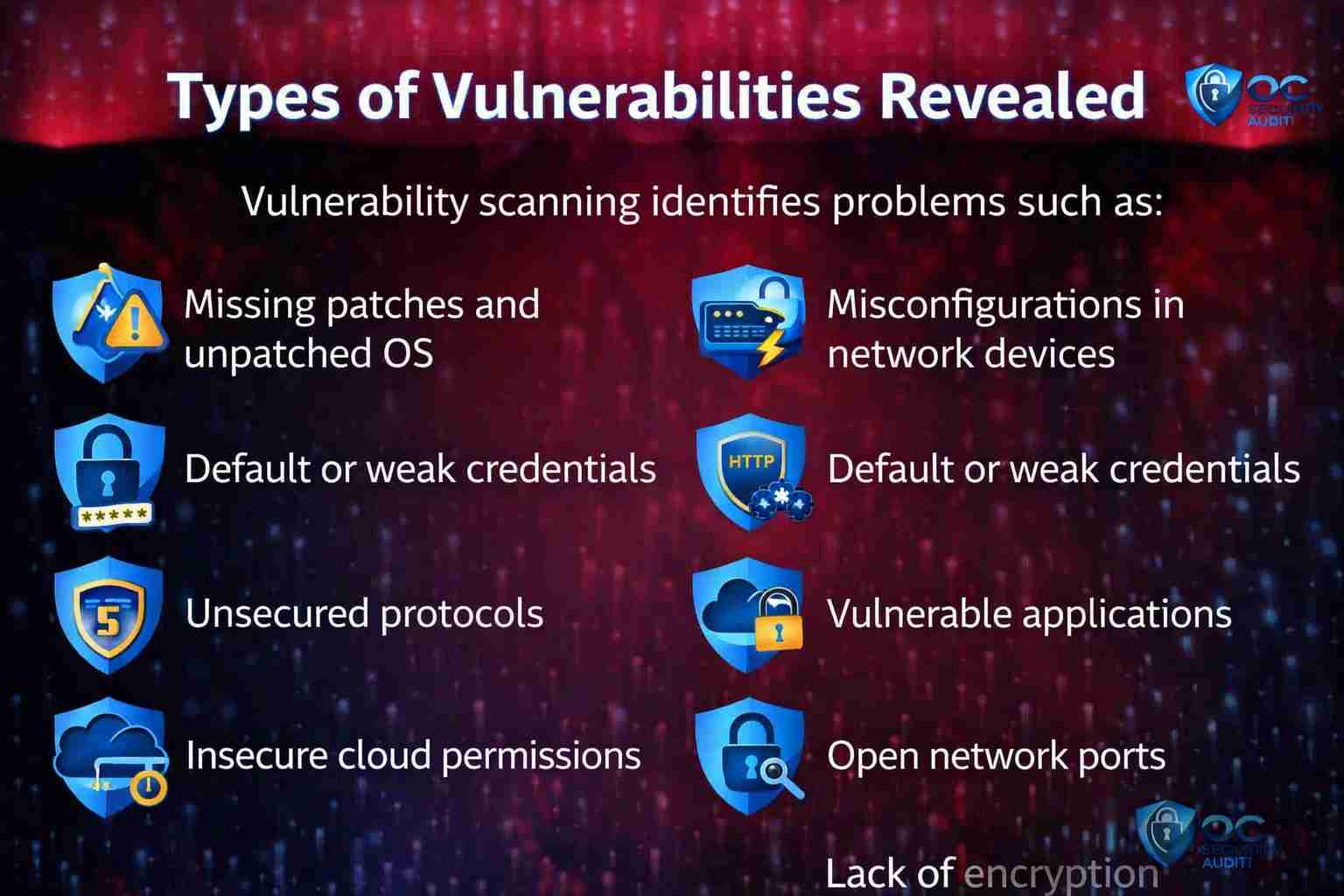
Coverage for operating systems, browsers, third-party applications, firmware, network devices, and cloud workloads
Known exploited vulnerabilities, critical assets, internet-facing systems, and privileged endpoints
Compliance reports, failed patch remediation, reboot handling, and post-patch validation
Technical areas to validate
Reconcile patch platforms with asset inventory, EDR, vulnerability scanners, and domain/cloud directories
Use risk-based prioritization for exploited vulnerabilities, public exposure, sensitive data, and business-critical systems
Document exceptions with compensating controls, owner, expiration date, and management visibility
Validate remediation through scans, patch reports, version checks, and ticket closure evidence
Implementation should start with a clear control owner, a documented current state, and a short remediation backlog. Prioritize gaps that affect internet exposure, privileged access, regulated data, business continuity, audit evidence, ransomware resilience, or executive risk reporting. Where a gap cannot be fixed quickly, document the exception, business owner, compensating control, and review date.
This tool is for initial guidance only and does not replace a professional cybersecurity audit, compliance assessment, penetration test, technical validation, or legal/compliance review. For a deeper review, use the result as a starting point for an OC Security Audit engagement with Ali Hassani, CISO, or request help through OC Security Audit contact.
Work with the consultant behind these Internal Audit Tools
Ali Hassani brings 25+ years of cybersecurity, network security, IT, compliance, internal audit, Microsoft infrastructure, firewall review, server hardening, identity security, backup, and risk management experience.
OC Security Audit uses practical internal review methods that help organizations assess technical control maturity, collect stronger evidence, identify likely audit findings, and prioritize remediation in a way that fits the real environment.
Relevant background for this topic includes internal security audits, cybersecurity assessments, firewall and switch reviews, Microsoft infrastructure security, Active Directory and Group Policy review, database and application security assessment, incident response planning, backup and disaster recovery review, compliance readiness, and security roadmap planning.
Select one or more internal audit modules, answer the questions, and generate a report with category scores, colorful charts, gap summaries, and priority recommendations.
Your internal audit questions
Answer using the scale below. Yes / Implemented = 2 points, Partially / In progress = 1 point, No / Not sure = 0 points, Not Applicable is excluded from scoring.
Your Internal Audit Readiness Summary
Results and recommendations
This is a starting point, not a final audit. A formal internal cybersecurity assessment should be based on your actual systems, logs, infrastructure, users, policies, vendors, and business workflows.
This free Internal Audit Tool is an introductory self-assessment based only on the answers provided by the user. It is not a full internal security audit, compliance certification, penetration test, vulnerability assessment, technical validation, or final professional opinion. For formal review, compliance readiness, security remediation, technical validation, or executive reporting, a professional internal cybersecurity assessment by OC Security Audit is recommended.
Verify failed updates, unsupported assets, reboot dependencies, and compensating controls. Record the owner, business reason, expiration date, and validation evidence for every material exception.
If patch evidence, ownership, or exception risk remains uncertain, contact OC Security Audit for a professional review of the affected systems and remediation priorities.
FAQ
Common questions
What does this internal audit tool assess?
It reviews patch management controls using a practical scoring model focused on operational evidence, control maturity, and likely internal audit gaps.
Who should use this tool?
It is designed for business owners, IT managers, IT directors, CISOs, vCISOs, compliance managers, internal IT teams, and operational leaders who want a structured starting point before a deeper review.
Does this replace a formal audit?
No. It is an introductory self-assessment only and does not replace a full internal security audit, compliance assessment, penetration test, vulnerability assessment, technical validation, or final professional opinion.
How should I use the result?
Use the result as a discussion starter to identify weak areas, collect evidence, prioritize remediation, and decide whether a deeper internal security audit by OC Security Audit is appropriate.
Need a deeper internal security audit?
OC Security Audit can help you move beyond self-scoring into a professional internal security assessment, remediation roadmap, control validation plan, or executive-ready internal audit review.
Use this page as an initial guide, then validate the weakest areas with a deeper review of your actual infrastructure, policies, identity systems, backup processes, monitoring, and evidence.
This website uses essential cookies for security and operation. Optional analytics and advertising cookies help measure site use and outreach. Choose Allow or Deny. You can change your choice at any time.
Essential
Always active
The technical storage or access is strictly necessary for the legitimate purpose of enabling the use of a specific service explicitly requested by the subscriber or user, or for the sole purpose of carrying out the transmission of a communication over an electronic communications network.
Preferences
The technical storage or access is necessary for the legitimate purpose of storing preferences that are not requested by the subscriber or user.
Analytics
The technical storage or access that is used exclusively for statistical purposes.The technical storage or access that is used exclusively for anonymous statistical purposes. Without a subpoena, voluntary compliance on the part of your Internet Service Provider, or additional records from a third party, information stored or retrieved for this purpose alone cannot usually be used to identify you.
Advertising
The technical storage or access is required to create user profiles to send advertising, or to track the user on a website or across several websites for similar marketing purposes.