
Orange County Incident Readiness
Ransomware Readiness Assessment for Orange County Businesses
Use this ransomware readiness to identify gaps across initial access and lateral movement, containment and evidence preservation, and backup integrity and recovery order. Treat the result as initial guidance and validate material findings through a professional review.
CISO-led guidance from Ali Hassani, backed by 25+ years of IT, cybersecurity, compliance, and infrastructure experience.
Overview
How ransomware enters businesses
Ransomware commonly begins with stolen credentials, phishing, exposed remote access, vulnerable systems, weak MFA, unmanaged endpoints, and poor segmentation.
A readiness review shows whether your business can contain an attack, recover critical systems, preserve evidence, and make decisions under pressure.
This page is for initial guidance and readiness planning only. It does not replace a professional cybersecurity audit, compliance assessment, penetration test, or legal/compliance review.

Review Areas
Ransomware readiness review areas
We review prevention, detection, containment, recovery, and executive decision points.
Identity and MFA review
Validate MFA, conditional access, admin roles, privileged accounts, remote access, and risky sign-in visibility.
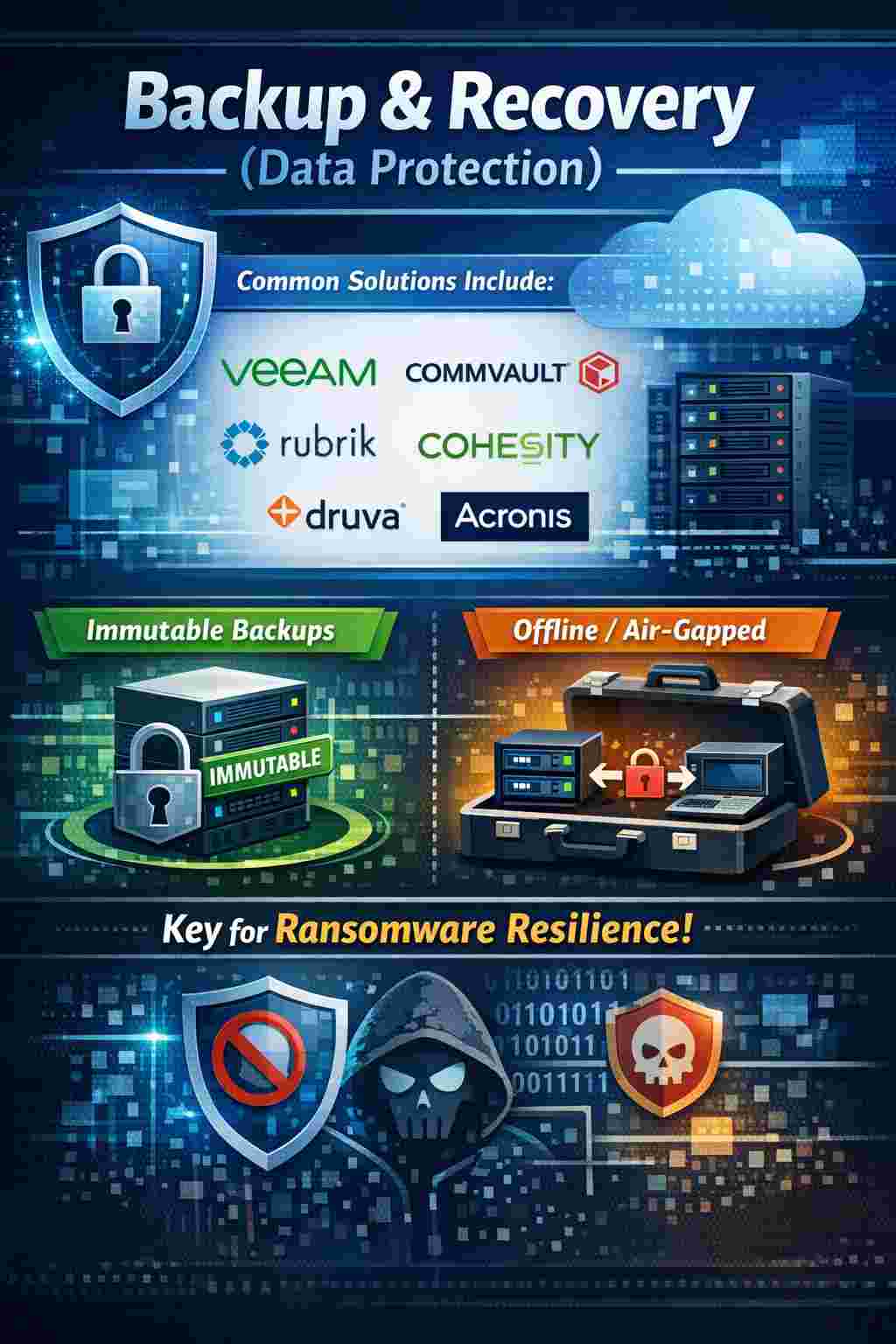
Backup and recovery review
Assess backup scope, retention, immutable protection, restore testing, and recovery ownership.
Endpoint and Microsoft 365 security
Review EDR, antivirus, patching, local admin rights, email security, sharing, mailbox rules, and logs.
Firewall and remote access risks
Review VPN, RDP, exposed services, firewall rules, segmentation, and remote support pathways.
Incident response readiness
Document roles, containment steps, evidence preservation, escalation, insurance coordination, and recovery decisions.
Executive reporting
Convert technical findings into a business-friendly remediation plan.
Technical Detail
What to validate before ransomware happens
- MFA coverage for users, admins, remote access, Microsoft 365, and privileged tools.
- Backup immutability, offsite protection, retention, protected credentials, and restore testing.
- Endpoint EDR coverage, patch status, local admin exposure, and server protection.
- Firewall rules, VPN configuration, exposed remote services, segmentation, and logging.
- Incident response contacts, containment actions, insurance process, and communication templates.
Related Links
Related ransomware readiness tools
Use these tools and services to review ransomware resilience, identity, backups, endpoint EDR, Microsoft 365, incident response, and BCDR.
Schedule a Ransomware Readiness ReviewAli Hassani, CISORansomware Resilience AssessmentIdentity and Access Management AssessmentBackup and Disaster Recovery AssessmentBusiness Continuity and Disaster Recovery ServicesEndpoint Security and EDR AssessmentMicrosoft 365 Security AuditIncident Response and Digital ForensicsBackup and Disaster Recovery SupportCybersecurity Implementation Support

About Ali Hassani
Created by Ali Hassani, CISO
Ali Hassani brings 25+ years of IT, cybersecurity, compliance, Microsoft infrastructure, network security, and risk assessment experience to OC Security Audit clients.
Credentials include CISSP, CCISO, CCNP, CCNA, MCSE, MCSA Security, MCITP, MCP, and MCTS.


FAQ
Ransomware readiness FAQ
What is ransomware readiness?
It reviews whether controls can reduce ransomware likelihood, detect attacks, limit spread, recover data, and guide response decisions.
Do you test backups?
We review backup design and evidence, including restore testing expectations. Hands-on restore testing can be coordinated when appropriate.
Is Microsoft 365 part of the review?
Yes. We review MFA, email security, mailbox rules, sharing, admin access, logging, and risky sign-in controls.
Do you provide incident response guidance?
We provide practical response readiness recommendations tailored to the business environment.
Can this help cyber insurance?
Yes. Many ransomware readiness controls align with cyber insurance questionnaire expectations.
Know whether your business can recover before ransomware tests it.
Schedule a ransomware readiness assessment for your Orange County business.