
Scope
Confirm boundaries and obligations.
Find exposure, strengthen essential controls, and build practical resilience around the systems your organization depends on.
Explore cybersecurity services →Evaluate controls independently, document defensible findings, and focus remediation on the risks with the greatest operational impact.
Explore security audits →Translate security obligations into clear evidence, accountable remediation, and a practical path toward audit or customer readiness.
Explore compliance services →Bring security governance, risk decisions, leadership communication, and improvement planning into one accountable executive program.
Explore vCISO services →Executive security leadership
Organize compliance readiness leadership so control statements, operating practice, ownership, and current evidence can be reviewed together without losing context.
CISO-led guidance from Ali Hassani, backed by 25+ years of IT, cybersecurity, compliance, and infrastructure experience.
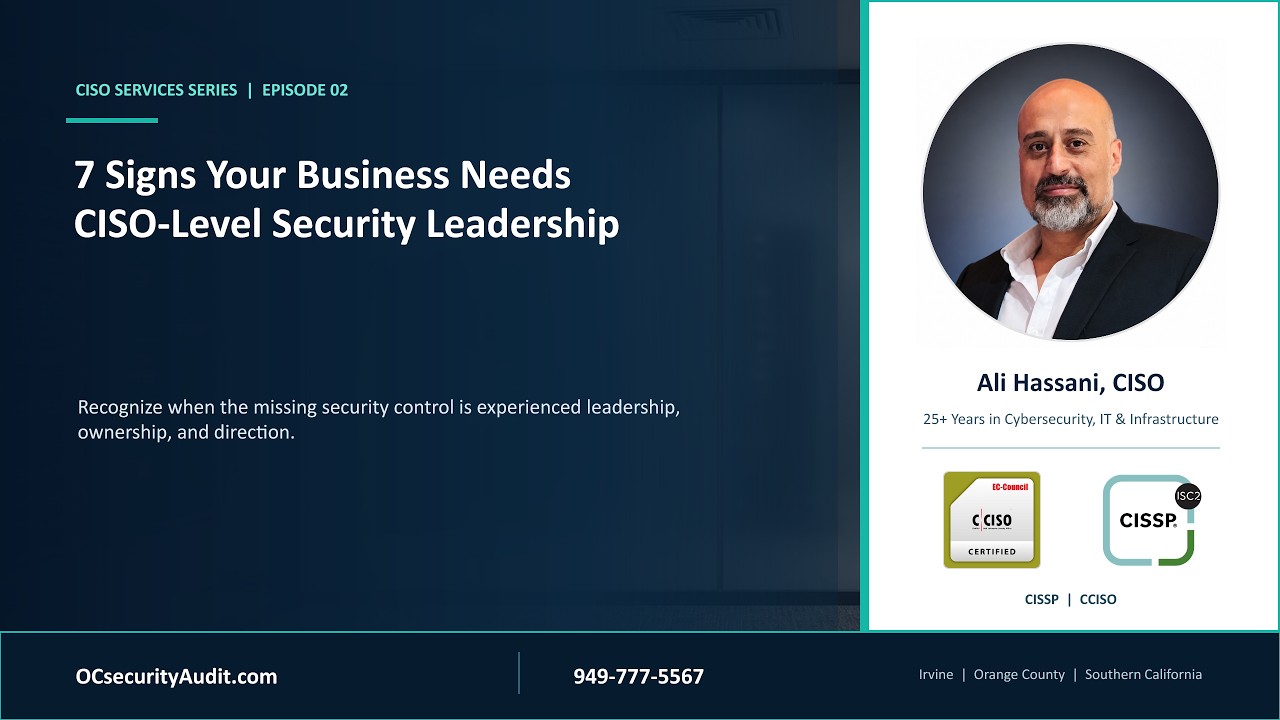
A focused video briefing for leaders and IT teams working through this page.
Virtual CISO Leadership Series · Episode 02
Use this concise briefing alongside the guidance on this page to connect ciso-level security leadership with clear evidence, accountable ownership, and a practical next action.
Readiness operating model
Compliance readiness is not a document-gathering exercise. It confirms what applies, how requirements operate, whether evidence is reliable, and how unresolved gaps will be treated.
Confirm boundaries and obligations.
Name safeguards and owners.
Validate quality and coverage.
Assess impact and cause.
Retest and report readiness.
Leadership workstreams
Translate regulatory, contractual, insurer, customer, and framework expectations into clear control objectives without duplicate projects.
Set authoritative sources, owners, collection dates, review criteria, retention, and quality checks.
Prioritize gaps by risk and dependency, assign owners, surface budget choices, and validate corrections.
Framework-ready decisions
| Area | Leadership question | Operational evidence | Failure to avoid |
|---|---|---|---|
| Governance | Who approves risk direction? | Charters, minutes, policies | Documents without authority |
| Access | How is access reviewed? | Settings, approvals, review records | Incomplete population or period |
| Protection | Which safeguards reduce exposure? | Configuration, inventory, tests | Controls that cannot be shown |
| Response | Can teams coordinate and recover? | Plans, exercises, backup tests | Untested plans |
| Vendors | How is dependency risk governed? | Tiering, contracts, access reviews | Questionnaires without treatment |
Choose the right next step
Move to Security Policies and Procedures for policy direction, standards, procedures, and exceptions.
Use the free Compliance Readiness Assessment Wizard to organize an initial control and evidence review before professional validation.
Review Cybersecurity Compliance Consulting for structured gap and evidence assessment.

Ali Hassani, CISO
Ali Hassani combines executive CISO perspective with 25+ years of hands-on cybersecurity, infrastructure, compliance, and IT operations experience. Ambiguous requirements become practical control ownership and defensible remediation decisions.
Review Ali Hassani's cybersecurity and IT leadership experience
Common questions
No. It improves control and evidence quality, but results depend on criteria, performance, auditor judgment, and continued operation.
Often yes, when scope, period, population, and requirement-specific details are appropriate.
Begin early enough to remediate gaps and accumulate operating evidence; timing depends on scope and maturity.
Discuss scope, control ownership, evidence quality, remediation oversight, and executive reporting.
This website uses essential cookies for security and operation. Optional analytics and advertising cookies help measure site use and outreach. Choose Allow or Deny. You can change your choice at any time.