
Threats and Vulnerabilities
DarkSword iPhone Exploit Chain: What the 2026 Web Attacks Mean for Businesses
Understand Google’s DarkSword iPhone exploit-chain findings, the affected iOS versions, and the patching and response actions businesses should take.
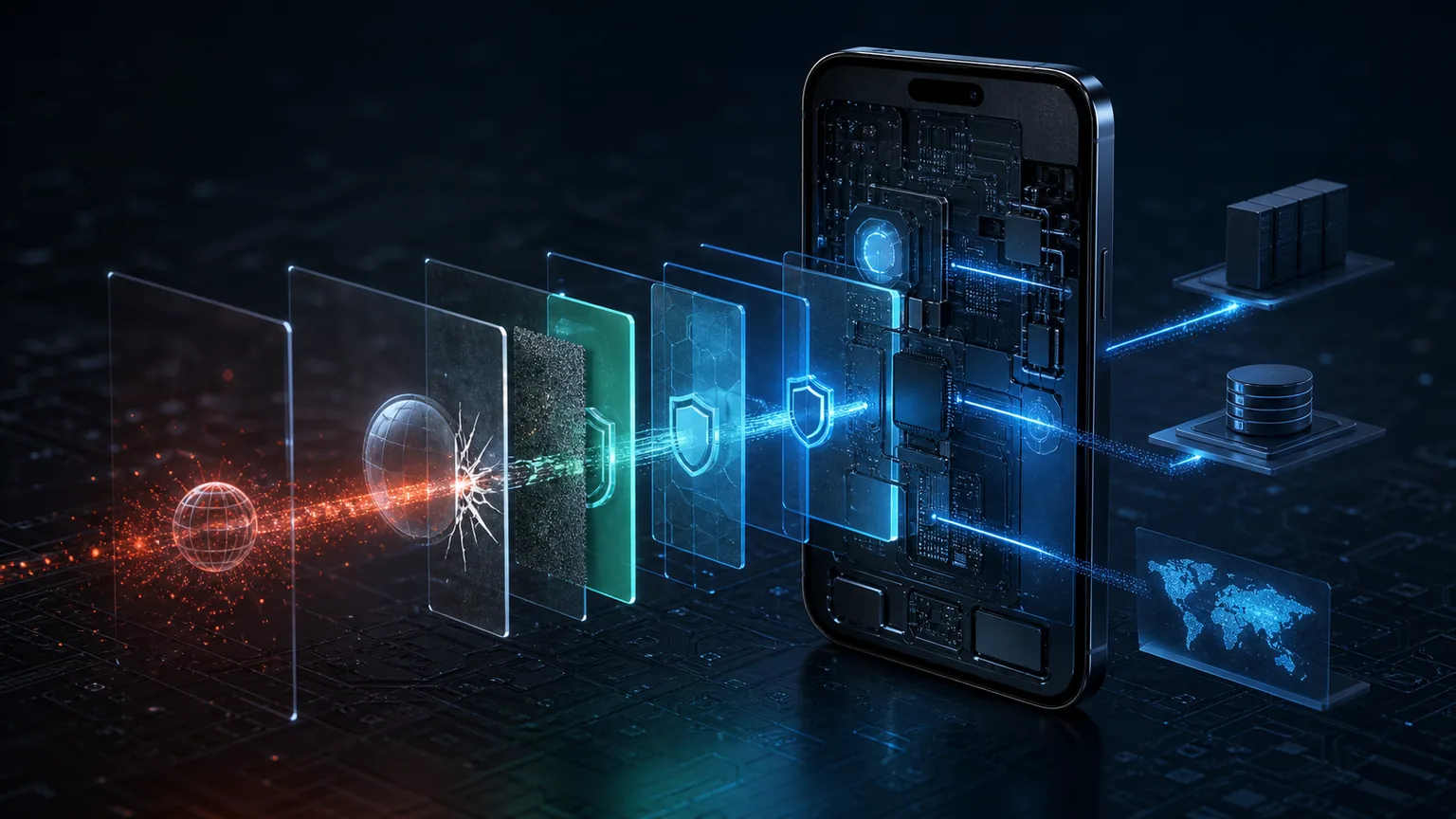
DarkSword is a reminder that a modern iPhone can face a serious risk without a malicious app appearing in the App Store. Google Threat Intelligence Group reported in March 2026 that a full-chain iOS exploit had been used since at least November 2025 by multiple commercial surveillance vendors and suspected state-sponsored actors. The reported chain began on the web and linked several vulnerabilities to escape browser protections, gain higher privileges, and install specialized payloads.
For businesses, the correct lesson is not that every iPhone was compromised. It is that delayed updates, unmanaged devices, and weak mobile incident visibility can turn a targeted web attack into an unmanaged enterprise exposure. The response should start with accurate inventory, current Apple releases, risk-based use of Lockdown Mode, and a documented escalation path for high-risk users.
Executive summary
The Google Threat Intelligence Group analysis describes six vulnerabilities and three final malware families in a chain observed against iOS 18.4 through 18.7. Google reported activity in Saudi Arabia, Turkey, Malaysia, and Ukraine, but did not state that every device or organization in those locations was affected. Apple subsequently documented additional protections in releases including iOS 18.7.7 and earlier fixes carried into current software.
Business priorities are straightforward:
- verify the iOS version and update eligibility of every business-access device;
- move unsupported or persistently outdated devices out of trusted access paths;
- identify executives, journalists, researchers, public officials, and others with elevated targeting risk;
- preserve evidence and seek qualified assistance when Apple sends a threat notification;
- test mobile-device management reporting instead of assuming updates succeeded;
- connect mobile risk decisions to identity, email, cloud, and incident-response controls.
What Google reported—and what it did not
Google described DarkSword as a full exploit chain assembled from six vulnerabilities. Its report says the chain supported multiple delivery paths and ended with one of three malware families called GHOSTBLADE, GHOSTKNIFE, and GHOSTSABER. These are Google’s research names and findings; OC Security Audit is not independently attributing the activity or asserting that a particular organization was compromised.
The affected-version range is especially important. GTIG reported support for iOS 18.4 through 18.7, while Apple continued to ship protections through later iOS 18 security releases and iOS 26. Google stated that all six vulnerabilities were patched by iOS 26.3, with most addressed earlier. A business therefore should not convert the article into a static “safe version” rule. It should compare each device with Apple’s current supported releases and its own management evidence.
Apple’s web-based attack protection guidance advises installing the latest software and describes additional defenses for people at higher risk. Apple’s iOS 26.2 security advisory also contains exploitation statements for vulnerabilities connected to the broader research. These primary records are better decision sources than copied vulnerability lists that may become stale.
Why a web-delivered chain changes the business conversation
A web attack can cross controls that many organizations treat as separate. The initial request may involve messaging, email, a redirected link, or a website. The browser then processes content, the operating system enforces isolation and memory protections, and a later stage may attempt to reach data or maintain access. Business identity and cloud sessions on the phone can become part of the impact even when the original entry point was not a corporate application.
This makes four evidence sources important: the device’s exact model and OS build, the delivery record, relevant identity and cloud activity, and any available specialist mobile-forensic findings. A URL alone does not prove compromise. A clean email gateway verdict does not prove the phone was safe. An updated phone also does not establish what happened before the update.
Immediate enterprise actions
Confirm real update state
Use mobile-device management or another accountable inventory to record device model, ownership, iOS build, last check-in, encryption/passcode state, and update status. Sample devices and compare the management console with the handset. If unmanaged personal devices access business data, document how the organization will identify outdated devices and restrict access without collecting unnecessary personal information.
The existing iPhone Security Review Checklist provides a user-facing settings review. Organizations also need centralized proof that required devices completed the update.
Define a high-risk-user path
High-risk employees should know how to recognize an authentic Apple threat notification, whom to contact, and when to enable Lockdown Mode. Avoid sending a generic instruction to erase the phone immediately. A reset may protect future use but can also remove evidence needed to understand targeting, confirm scope, or support a legal or safety decision.
Restrict unsupported devices
When a device cannot run a supported release, risk acceptance should have an owner, expiration date, and compensating controls. Options may include removing business accounts, limiting access to lower-risk services, replacing the device, or requiring a managed alternative. “The phone still works” is not a security exception.
Connect mobile alerts to incident response
The response plan should identify who preserves the notification, message, link, time, account information, and device state; who contacts Apple or a qualified forensic provider; and who reviews related identity and cloud activity. An independent mobile-device security assessment can help expose governance gaps, but it does not replace forensic analysis of a suspected compromise.
Questions executives and IT leaders should ask
- Can we identify every iPhone accessing company data and its current OS build?
- How quickly do critical Apple security releases reach managed devices?
- What happens when an employee delays or cannot install an update?
- Which users have elevated targeting risk, and have we explained Lockdown Mode tradeoffs to them?
- Do employees know that an Apple threat notification never asks for a password or verification code?
- Can the incident team preserve evidence before destructive remediation?
- Can identity and cloud teams review activity associated with a potentially affected phone?
What not to conclude
DarkSword reporting does not prove that all iPhones, all iOS 18 devices, or all businesses were compromised. It does not justify naming a victim or attacker without evidence. It also does not mean that consumer antivirus software can independently certify an iPhone as clean. The most defensible enterprise position is to maintain supported software, measurable management, a high-risk-user control path, and specialist escalation for credible targeting.
Sources
Review your organization’s iPhone exposure
OC Security Audit can help leaders examine mobile governance, update evidence, high-risk-user protections, and incident readiness without treating a checklist as a forensic conclusion. Contact OC Security Audit or review the background of Ali Hassani, CISO, whose work spans cybersecurity auditing, Microsoft infrastructure, cloud security, compliance, and executive risk guidance.
Update and correction history
- August 2026: Apple source links were revalidated and updated to current official canonical destinations; the surrounding analysis and conclusions were unchanged.
- July 2026: Initial analysis prepared from Google and Apple primary sources available through July 31, 2026.